



Living sustainably does not mean changing your entire lifestyle overnight. You do not have to throw away everything you own, follow a complicated routine, or buy expensive products just to live responsibly.
In reality, eco-friendly living begins with small decisions. Carrying a reusable bottle, avoiding unnecessary packaging, switching off appliances when they are not in use, and choosing durable household products can all make a difference over time.
As we often say in India, “Boond-boond se sagar banta hai.” In the same way, small responsible choices made by millions of people can create a much larger positive impact.
The purpose of a sustainable lifestyle is not to be perfect. It is simply to become more aware of what we buy, how we use it, and what happens to it after we no longer need it.
What Does Eco-Friendly Living Really Mean?

Eco-friendly living means making everyday choices that use resources more thoughtfully and create less unnecessary waste. It is about buying only what you need, using products for longer, and choosing reusable options wherever they make practical sense.
For example, replacing a frequently used disposable item with a reusable one may appear to be a small change. However, when that reusable product is used regularly for months or years, it can reduce the need for many single-use items.
A practical eco-conscious lifestyle may include:
- Carrying reusable bags while shopping
- Using reusable bottles, cups, plates, and cutlery
- Repairing useful items instead of immediately replacing them
- Conserving water and electricity
- Avoiding unnecessary packaging
- Buying durable products instead of short-lived alternatives
- Supporting responsible Indian manufacturers
- Reusing containers and household materials creatively
- Separating recyclable and organic waste
Har chhota kadam important hai. You do not need to make every change at once. Begin with the part of your routine where waste is created most frequently.
Start with Your Kitchen and Dining Table
The kitchen is one of the easiest places to begin your sustainable journey because it is used every day. From storing groceries and preparing meals to serving tea and washing dishes, our kitchens involve hundreds of small decisions.
Start by observing what you throw away during an ordinary week. You may find disposable cups, takeaway containers, plastic spoons, shopping bags, food wrappers, and damaged low-quality utensils.
Once you identify the source of waste, replacing it becomes easier.
Some simple kitchen changes include:
- Store grains and spices in reusable containers
- Carry your own shopping bag for groceries
- Avoid disposable spoons and plates at home
- Use washable cloth instead of disposable kitchen wipes
- Plan meals before shopping to reduce food waste
- Reuse suitable containers before recycling them
- Choose durable and reusable tableware
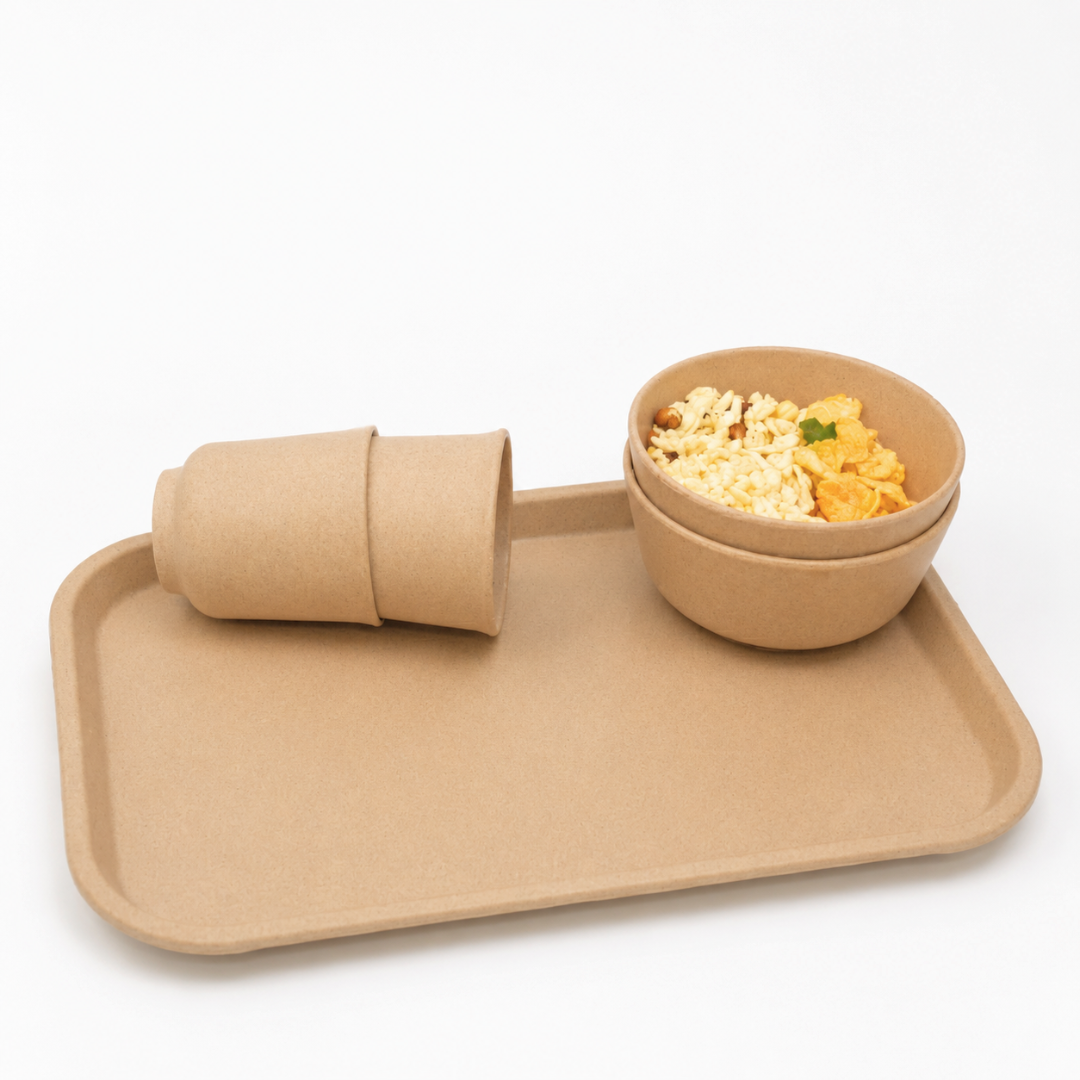
Switching to eco-friendly tableware can be a practical step for families that want products that are both useful and thoughtfully made. Plates, bowls, mugs, glasses, and serving trays are used every day, so their durability and material matter.
Products made using bamboo fibres, rice husk, coffee husk, and agricultural crop residue bring discarded plant material back into everyday use. Instead of being treated only as waste, these materials can become part of functional bamboo bio-composite products.
Why Material Choice Matters
A product should not be considered sustainable only because it looks natural or has the word “eco” printed on its packaging. Its usefulness, durability, manufacturing process, and expected lifespan also matter.
Before buying a product, ask yourself:
- Will I use it regularly?
- Can it replace something disposable?
- Is it strong enough for long-term use?
- Is its material clearly explained?
- Can I maintain it easily?
- Is the brand transparent about where and how it is made?
These questions help separate genuinely useful eco-friendly products from products purchased only because of attractive marketing.
At Pacing Grass, everyday tableware and drinkware are created using patented bamboo-based bio-composite technology. The material combines bamboo fibres with rice husk, coffee husk, and other agricultural crop residue to create practical, reusable products.
These are not carved wooden or solid-bamboo utensils. They are engineered bio-composite products designed for modern daily use. Explaining that difference clearly is important because customers deserve to understand what they are bringing into their homes.
Turn Your Tea and Coffee Routine into a Better Habit
Tea and coffee are a part of daily life in most Indian homes and offices. A morning cup of coffee, evening chai with family, or a quick tea break at work may seem like a small routine, but it is repeated almost every day.
That makes drinkware a sensible place to adopt reusable alternatives.
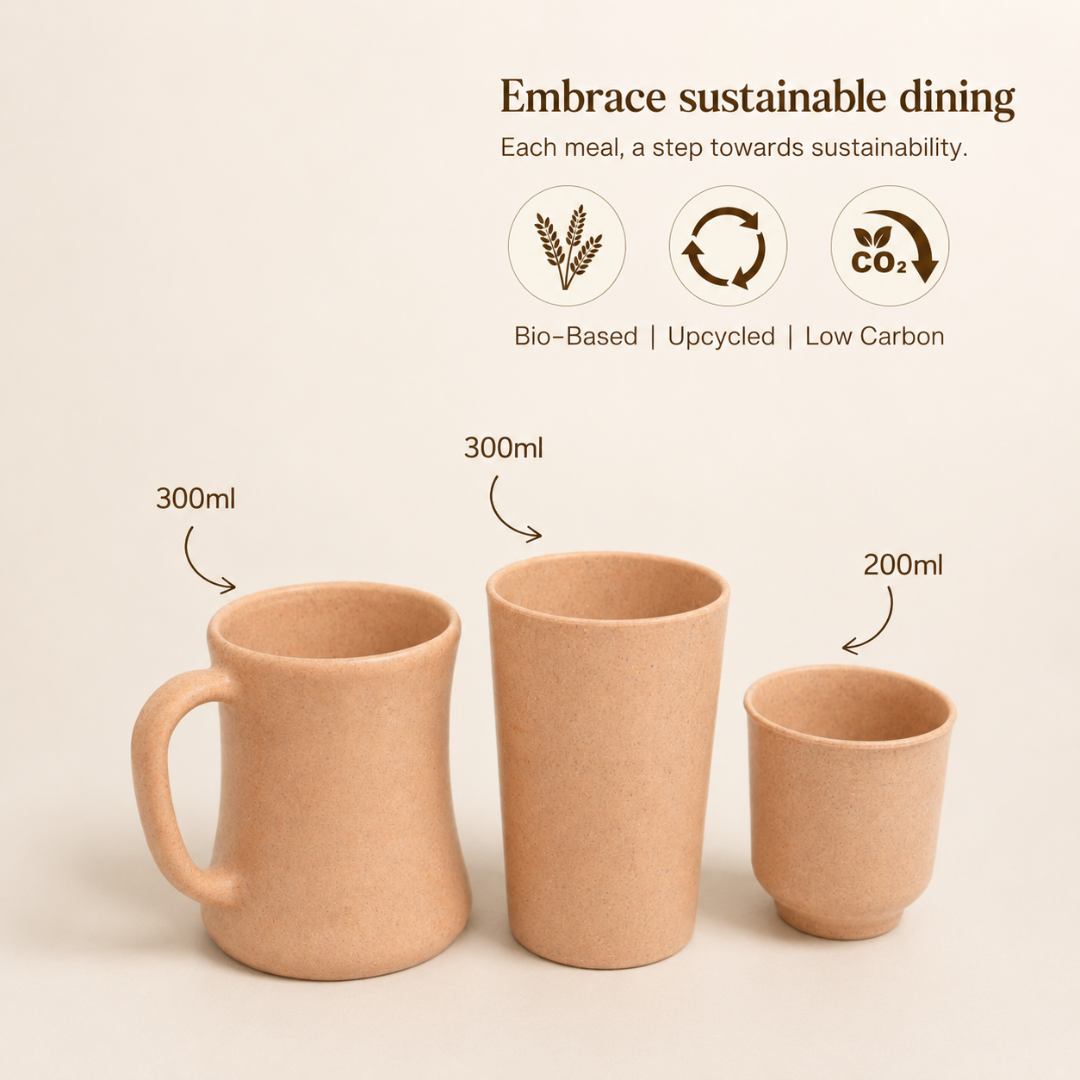
A bamboo coffee mug can be used for coffee, tea, milk, and other everyday beverages. Similarly, reusable glasses and kullads can help reduce dependence on disposable cups during regular use.
Good sustainable drinkware should not only look attractive; it should also be lightweight, comfortable to hold, easy to clean, and suitable for repeated use. A product that fits naturally into your routine is more likely to be used regularly.
Pacing Grass drinkware is made using bamboo-based bio-composite material and has a natural, earthy appearance. Its lightweight construction makes it suitable for homes, offices, cafés, and gifting.
For people worried about frequently breaking ceramic mugs, unbreakable coffee mugs and break-resistant drinkware can also provide added convenience. They are particularly helpful in busy homes, workspaces, cafés, and homes with children or elderly family members.
Rice Husk: From Agricultural Residue to Everyday Products
Rice is grown and consumed across India, creating a large amount of husk during processing. Instead of seeing this material only as an unwanted residue, innovative manufacturing can use it as part of useful composite products.
Rice husk products demonstrate how agricultural materials can be given another purpose. When combined carefully with bamboo fibre and other crop residue, rice husk can become part of reusable bowls, plates, mugs, glasses, trays, and similar household products.
This approach supports the idea of upcycling—using an existing material to create something useful instead of allowing its value to be lost.
Jo cheez kal waste samjhi jaati thi, wahi aaj aapke dining table ka useful hissa ban sakti hai.
However, material alone is not enough. The final product must also be functional, durable, food-grade, and suitable for its intended use. Sustainability works best when a product is responsible as well as practical.
Reduce Waste Without Making Life Difficult
One reason people give up on sustainable habits is that they try to change too much too quickly. A better approach is to make one realistic change at a time.
Try this simple monthly plan:
Week 1: Observe
Notice what you regularly throw away at home or work. Do not judge yourself; simply identify repeated waste.
Week 2: Replace One Item
Choose one frequently discarded product and find a practical reusable alternative. It could be a bottle, shopping bag, coffee mug, lunch box, spoon, or serving bowl.
Week 3: Improve the Habit
Keep the reusable item where you will remember it. A reusable bag left at home cannot help you at the market, so keep one near the door or in your vehicle.
Week 4: Review
Ask whether the new habit was convenient. If it worked, continue it and choose one more small change for the following month.
This method is easier to maintain than trying to build a completely zero-waste home in a single weekend.
Buy Less, but Choose Better
Sustainable living is not about buying a large collection of “green” products. Sometimes, the better choice is to use what you already own until it genuinely needs replacing.
When replacement becomes necessary, look for an option that is:
- Useful for your actual routine
- Strong enough for repeated use
- Easy to maintain
- Made with clearly stated materials
- Appropriate for your household
- Offered by a transparent brand
- Free from exaggerated or unclear claims
Durability is an important part of sustainability. If a product breaks quickly and needs repeated replacement, its attractive appearance will not make it a responsible choice.
This is why reusable and durable eco-friendly tableware can make sense for everyday dining. A well-designed bowl or plate is not a decorative purchase—it becomes part of breakfast, lunch, dinner, snacks, and family gatherings.
Make Sustainable Choices at Work
Eco-friendly habits should not stop at home. Offices regularly use disposable cups, packaged water bottles, tissues, takeaway containers, and promotional gifts that may never be used.
Businesses can begin with practical changes:
- Encourage employees to carry reusable bottles and mugs
- Keep reusable serving products in meeting rooms
- Reduce unnecessary printing
- Separate recyclable waste
- Avoid disposable tableware during office events
- Choose practical gifts instead of decorative clutter
- Purchase from responsible manufacturers where possible
For festivals, employee onboarding, client appreciation, and company events, eco-friendly corporate gifts can offer a more meaningful alternative to generic merchandise.
A coffee mug, drinkware set, table organizer, coaster set, or dinnerware product is more likely to be used regularly than an item chosen only for decoration. Custom branding can also turn a practical product into a memorable corporate gift.
The goal should not be to add “eco-friendly” to the gift box. The goal should be to choose something useful, durable, and aligned with the company’s sustainability values.
Support Responsible Indian Manufacturing
Where a product comes from also matters. Supporting Indian businesses can strengthen local manufacturing, create employment, encourage domestic innovation, and reduce dependence on generic imported alternatives.
When searching for a bamboo tableware manufacturer India, buyers should look beyond product photographs. They should examine material information, food-contact suitability, manufacturing capability, customization options, care instructions, and the company’s actual experience.
Pacing Grass is an Indian sustainable tableware manufacturer developing reusable tableware, drinkware, serveware, and lifestyle products through patented bamboo-based bio-composite technology.
Its collection includes:
- Bamboo bio-composite plates
- Bowls in multiple capacities
- Coffee mugs and drinking glasses
- Reusable kullads
- Serving trays
- Spoons and coasters
- Dinner sets
- Kids’ dinner sets
- Corporate gifting combinations
These products are designed for homes, offices, restaurants, cafés, hospitality businesses, gifting, and resale.
Build a More Sustainable Home, Room by Room
Once you have improved your kitchen habits, look at other parts of your home.
Bathroom
- Turn off the tap while brushing
- Repair leaking taps
- Choose refillable containers where practical
- Use products completely before replacing them
- Avoid unnecessary single-use accessories
Bedroom
- Buy clothing thoughtfully
- Repair minor damage before discarding clothes
- Donate usable items responsibly
- Wash only when required
- Choose quality over excessive quantity
Living Room
- Use energy-efficient lighting
- Switch off unused devices
- Bring in plants suitable for your home
- Select durable décor
- Avoid buying trend-based items with no long-term purpose
Workspace
- Use a reusable coffee mug and bottle
- Reduce unnecessary printing
- Organize cables and stationery to prevent repeated purchases
- Reuse folders and packaging
- Keep a reusable spoon or cutlery set at your desk
Ghar badalne ki zarurat nahi hai—ghar ki chhoti aadatein badalne ki zarurat hai.
Do Not Let Perfection Stop Progress
A sustainable lifestyle can sometimes feel overwhelming. Social media may make it appear that responsible living requires a perfectly organized home, expensive products, and zero waste.
That is not realistic for most families.
You may still need packaged goods. You may forget your reusable bag. You may not have access to recycling facilities in your area. None of this means your efforts are useless.
Progress matters more than perfection.
If you replace one disposable habit, reduce unnecessary shopping, conserve water, and choose reusable products when replacement is needed, you are already moving in the right direction.
The best sustainable habit is not the most impressive one. It is the habit you can follow consistently.
How Pacing Grass Supports Everyday Sustainable Living
Pacing Grass was built around a simple idea: agricultural materials such as bamboo fibre, rice husk, coffee husk, and crop residue should have greater value than being discarded.
Using patented bio-composite technology, these materials are transformed into tableware and lifestyle products made for regular use. The aim is to make sustainability practical—something that can become part of breakfast, chai breaks, family dinners, office routines, café service, and gifting.
A responsible product should fit into real life. It should be useful, comfortable, durable, and easy to understand. That is the approach behind Pacing Grass’ bamboo bio-composite products.
Frequently Asked Questions
What is eco-friendly living?
Eco-friendly living means making thoughtful choices that reduce unnecessary waste, conserve resources, and encourage the use of durable and reusable products. It does not require a complete lifestyle change; small, consistent habits are a practical starting point.
How can I start a sustainable lifestyle at home?
Begin with one frequently repeated habit. Carry a reusable bag, reduce food waste, conserve water, switch off unused appliances, or replace regularly discarded tableware with reusable alternatives.
What is bamboo bio-composite tableware?
Bamboo bio-composite tableware is produced by combining bamboo fibres with materials such as rice husk, coffee husk, and agricultural crop residue through a controlled manufacturing process. It is different from utensils carved directly from bamboo wood.
Are rice husk products useful for everyday use?
Well-designed rice husk products can be used as reusable household items. Their suitability depends on the complete material formulation, manufacturing quality, food-contact testing, and the product’s intended use.
Why should businesses consider eco-friendly corporate gifts?
Eco-friendly corporate gifts can communicate a company’s values while giving employees and clients something practical. Reusable mugs, drinkware, tableware, organizers, and coasters can become part of everyday routines instead of being stored away or discarded.
Is sustainable living expensive?
It does not have to be. Using existing products for longer, reducing waste, conserving water and energy, and avoiding unnecessary purchases can also save money. When buying something new, focus on usefulness and durability rather than buying more products.
Final Thoughts
A cleaner and more responsible future will not be created by one perfect person. It will be created by many ordinary people making better choices whenever they can.
Carry the reusable bag. Finish the food you prepare. Switch off the light. Repair what can still be used. Choose durable products when something needs replacing. Support businesses that clearly explain their materials and processes.
These actions may look small on their own, but repeated every day, they become meaningful.
Chhoti aadatein hi bade badlav ki shuruaat hoti hain.
Begin with one change today, make it part of your routine, and then move to the next. That is how eco-friendly living becomes simple, practical, and lasting.