


Interest in starting a bamboo products business in India has grown quickly, and it is easy to see why. Bamboo grows fast, India has more of it than almost any country, and buyers are looking for alternatives to single-use plastic. But most articles on the subject stop at a list of “business ideas” and a promise of easy profits. This guide does something different. It explains the policy changes that opened up the sector, the product categories founders usually choose between, the constraints nobody mentions in the brochures, and a practical checklist for getting started.
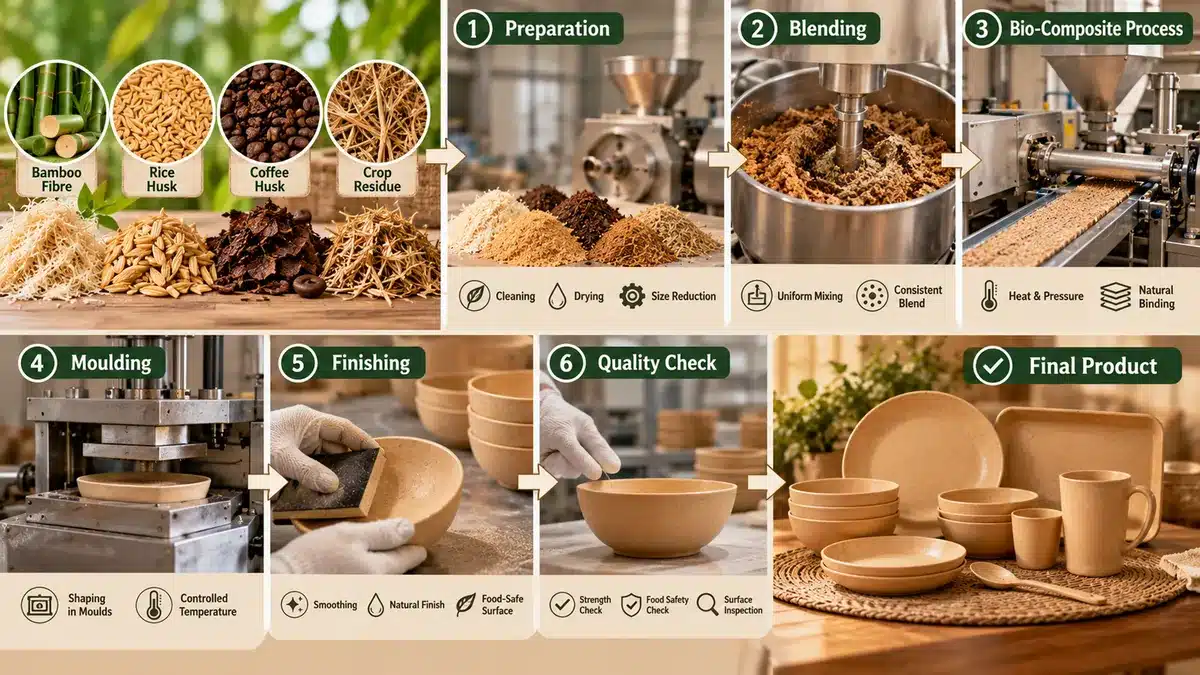
We write this as a company that makes everyday tableware from bio-composites of bamboo fibre, rice husk, coffee husk and crop residue. We are not a consultancy and we won’t quote revenue or profit figures. Every business is different, and numbers you cannot verify are worse than none.
Why bamboo is getting policy attention in India
Two policy moves changed the picture for anyone thinking about a bamboo business in India.
1. Bamboo grown outside forests is no longer legally a “tree”
Until 2017, the Indian Forest Act, 1927 counted bamboo as a tree. That meant farmers growing bamboo on their own land often needed permits to fell it and to move it, especially across state lines. The Indian Forest (Amendment) Ordinance of November 2017, later passed as an Act, removed bamboo from the definition of “tree”. As PRS Legislative Research summarises it, bamboo grown in non-forest areas no longer needs permission for felling or transport for economic use. Bamboo growing inside forests is still regulated.
One caution: states have their own forest and transit rules. The central government asked states to align them, and a Lok Sabha answer in December 2018 reported that 22 states and UTs had liberalised or exempted bamboo from felling and transit permits. Check the rules in the state where you source before you plan logistics.
2. The National Bamboo Mission shifted from planting to processing
The National Bamboo Mission (NBM) began in 2006-07 with a focus on growing bamboo. In April 2018 the Cabinet approved a restructured mission with an outlay of ₹1,290 crore, including ₹950 crore as the central share, for 2018-19 and 2019-20. The PIB release noted that the earlier mission had put limited effort into processing and product development, and that the restructured version would cover the whole value chain, linking growers with industry. It has continued as a centrally sponsored scheme since then.
According to a 2025 PIB document on the mission, India has the largest area under bamboo in the world, at 13.96 million hectares, and is second only to China in bamboo diversity, with 136 species. The same document says the scheme is implemented in 24 states and UTs.
How National Bamboo Mission support actually works
Many founders search for a “national bamboo mission subsidy” expecting a direct payment. That is not how it works. The government’s scheme portal, myScheme, explains that NBM is implemented through State Bamboo Missions, and applications go through the state-level body rather than a central portal.
You will see specific subsidy percentages for plantations and processing units quoted on consultancy and aggregator websites. We could not confirm current rates in an official source, so we haven’t repeated them here. Ask your State Bamboo Mission for the operational guidelines that apply this year, what support exists for processing units versus plantations, and what documents they need.
Bamboo products business ideas: the main categories
“Bamboo business” covers very different industries. Each has its own machinery, skills, buyers and rules. Broadly, founders choose between these:
- Handicrafts and home décor: baskets, lamps, mats and decorative pieces. Low machinery cost, high dependence on artisan skill and design.
- Furniture: chairs, shelving and outdoor furniture. Needs treatment to prevent insect and moisture damage, plus good joinery.
- Engineered bamboo: flooring, panels and boards made by laminating or compressing strips. Capital-intensive, closer to the wood-panel industry.
- Agarbatti sticks: a large, established market where raw-material quality and consistency matter a great deal.
- Charcoal and energy: bamboo charcoal, briquettes and pellets for fuel or industrial use.
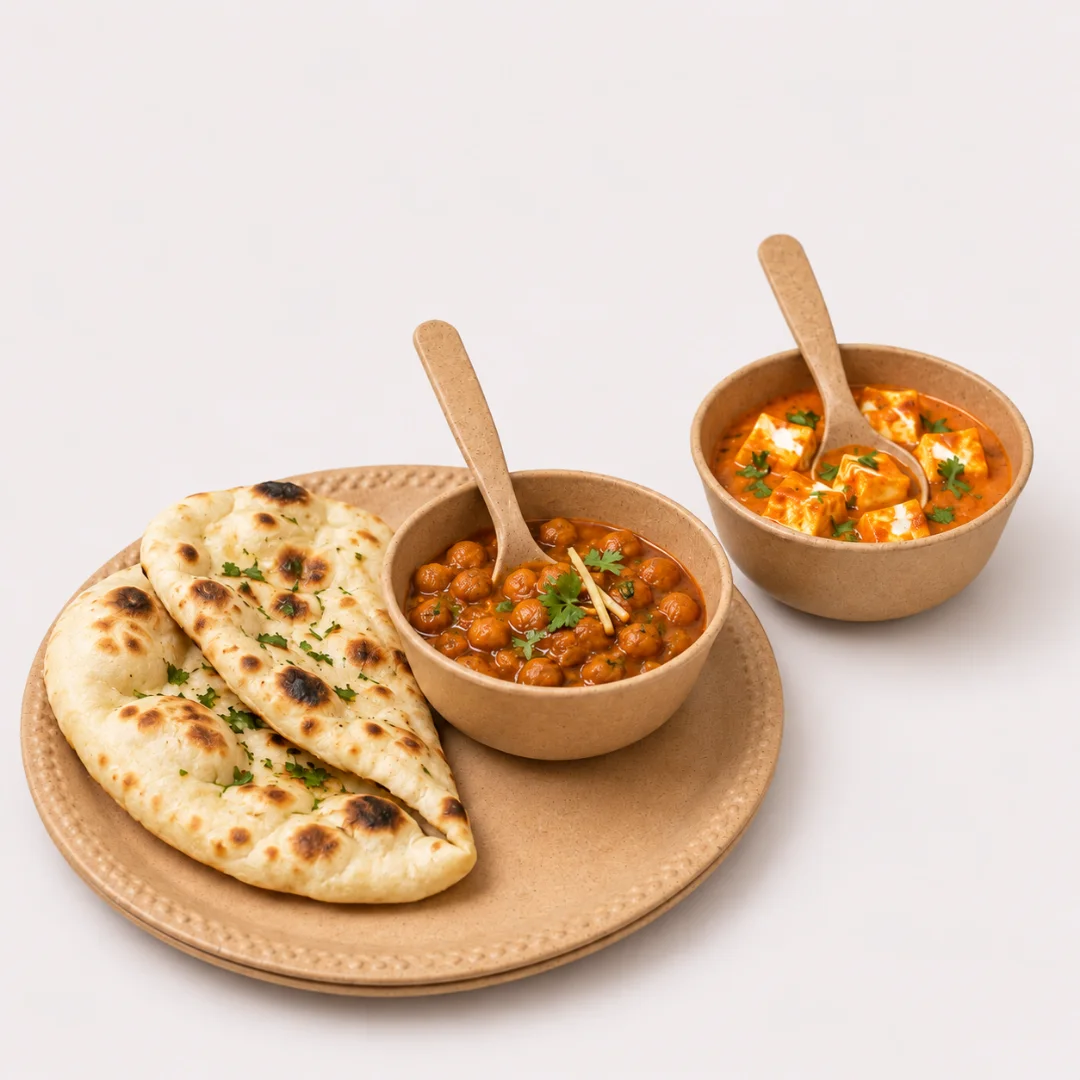
- Bio-composites and tableware: bamboo fibre, often combined with other plant residues and a binder, moulded into plates, bowls, mugs and organisers. This is the category we work in.
The categories differ so much that “bamboo” is almost a secondary detail. A furniture workshop and a moulding plant have little in common apart from the raw material.
Beyond bamboo: crop residue as an adjacent raw material
For bio-composite products, bamboo is often not the only plant input. Rice husk, coffee husk and other agricultural residues can also be processed into fillers and fibres. India produces a lot of these by-products, and some, like paddy straw in the north, are still burned in the field because there isn’t enough demand for them. We have written about why parali ends up as smoke and about rice husk as a material.
Demand for alternatives is also shaped by regulation. India banned a list of identified single-use plastic items, including plastic plates, cups, glasses and cutlery, from 1 July 2022, as the Press Information Bureau announced. That ban covers disposables, but it has pushed buyers, caterers and corporate gifting teams to look at reusable and plant-based products more seriously. Our piece on India’s move beyond plastic goes into this in more detail.
The real constraints most guides skip
The opportunity is real, and so are the hard parts. Before committing money, think through these:
- Raw-material supply and consistency. Bamboo species, age and moisture vary, and so do agricultural residues by season and region. Inconsistent input means inconsistent product.
- Processing technology. Treatment, drying, fibre preparation and moulding each need the right equipment and process control. Buying a machine is the easy part; getting repeatable quality is not.
- Food-contact compliance for tableware. If your product touches food, you need to know exactly what your binder is and have migration testing done at an accredited lab against the applicable FSSAI and BIS requirements. In Europe, regulators have raised concerns about some “bamboo” tableware made with melamine resin, so buyers increasingly ask for test reports. Build testing into your plan and budget from day one.
- Working capital. Raw material is often bought in season, while sales come through the year. Marketplaces and B2B buyers may also pay on credit.
- Competition from imports and lookalikes. Cheap imported products labelled “bamboo” set price expectations. You need a clear reason why a buyer should pay for yours.
- Claims. Words like “biodegradable”, “compostable” and “non-toxic” need evidence. Unsupported claims create legal risk and damage trust.
How to start a bamboo products business: a practical checklist
- Pick one category and one customer. “Bamboo products” is too broad. Choose, for example, corporate desk accessories or restaurant tableware, and learn what that buyer needs.
- Map your sourcing. Identify growers, cooperatives or residue aggregators, check state transit rules, and secure samples across seasons.
- Run a small pilot. Make a limited batch, test durability and finish, and get feedback from real users before scaling.
- Get testing and documentation in order. For food-contact items, arrange migration testing at an accredited lab. Keep reports ready to share with buyers.
- Register and connect with support schemes. Register as an MSME on the Udyam portal, and contact your State Bamboo Mission about current NBM support and guidelines.
- Choose your channels. B2B (corporate gifting, hospitality, bulk buyers) brings larger orders and slower payments. D2C and marketplaces bring faster feedback and higher marketing costs. Many brands start with one and add the other.
- Tell a true story. Explain your material, your process and your testing plainly. It builds more trust than any claim.
What we have learned making bio-composite tableware
A few lessons from our own work, offered as observations rather than a formula. Plant materials don’t behave identically from batch to batch, so process control matters as much as the recipe. Customers ask what a product is made of far more often than founders expect, and a clear, honest answer wins more trust than a list of eco-labels. And everyday usefulness sells better than sustainability alone: people choose a mug because they like using it, and the material story is the reason they come back. You can read more about Pacing Grass and how we started with crop waste turned into kitchenware.
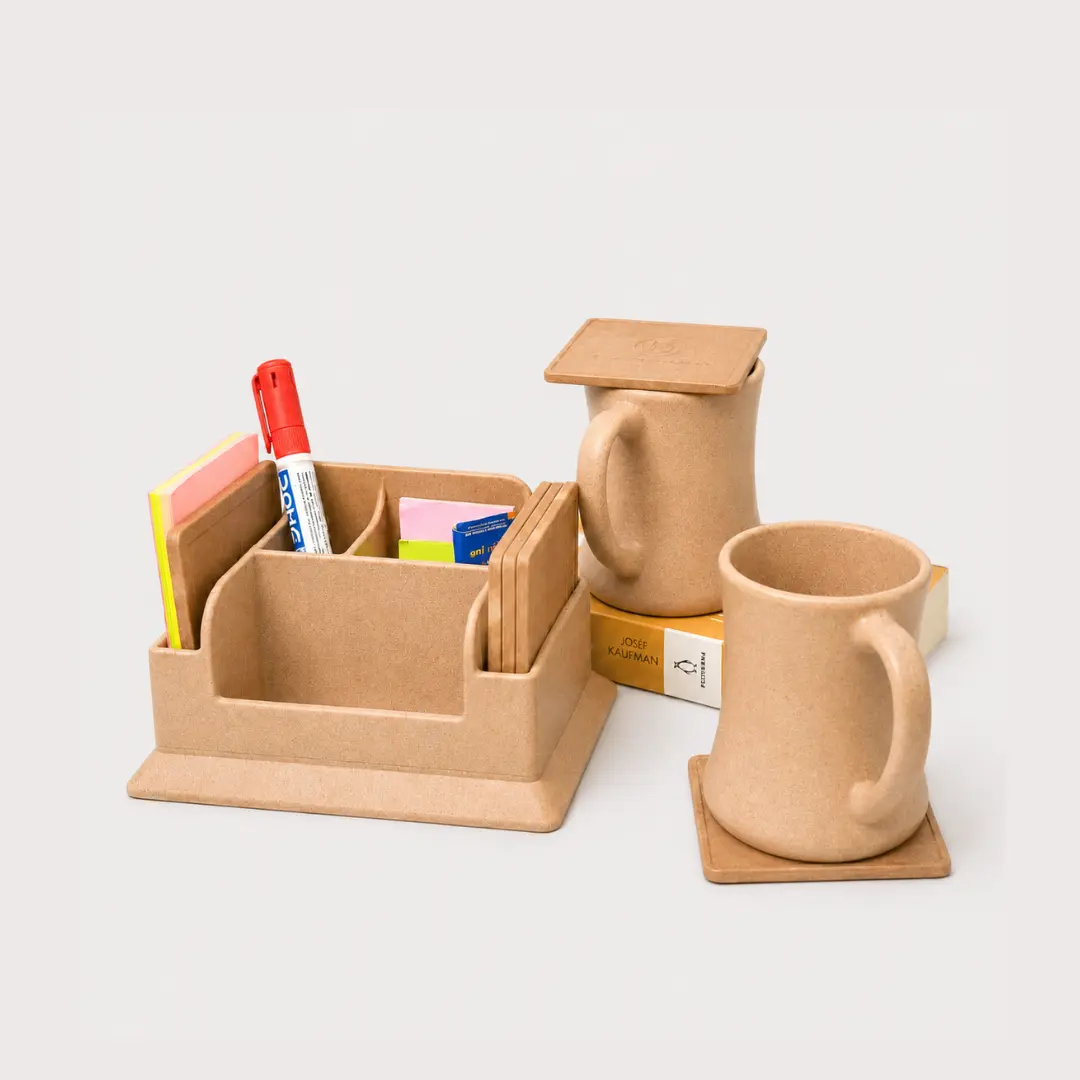
If you are a corporate buyer, retailer or hospitality business looking for bio-composite products in bulk, get in touch with our team.
If you buy for a business, our bulk and corporate gifting range is a good starting point.
Frequently asked questions
Is bamboo a tree in India?
Not under the Indian Forest Act when it is grown outside forests. A 2017 amendment removed bamboo from the Act’s definition of “tree”, so bamboo grown on non-forest land no longer needs permission for felling or transport for economic use. Bamboo growing inside forests is still regulated, and state rules can differ, so check locally.
How do I get National Bamboo Mission support?
The National Bamboo Mission is implemented through State Bamboo Missions, so you apply at the state level rather than through a central portal. Contact your State Bamboo Mission or state agriculture or horticulture department, ask for the current operational guidelines, and confirm what support exists for plantations, nurseries or processing units in your state.
What are the main bamboo products business ideas in India?
The main categories are handicrafts and décor, furniture, engineered bamboo such as flooring and panels, agarbatti sticks, charcoal and energy products, and bio-composite items like tableware. Each needs different machinery, skills and buyers, so choose one category and one customer type rather than trying to cover the whole sector.
How much bamboo does India have?
According to a 2025 Press Information Bureau document on the National Bamboo Mission, India has the world’s largest area under bamboo, about 13.96 million hectares, and is second only to China in bamboo diversity with 136 species. The mission is implemented in 24 states and union territories.
Do bamboo tableware products need testing in India?
Any product that touches food should be tested for migration of substances into food at an accredited laboratory against the applicable FSSAI and BIS requirements. For bamboo or plant-fibre composites, the binder is the key question. Keep test reports ready, because retailers, corporate buyers and informed customers increasingly ask to see them.