


Introduction:
Hello everyone,
When most people think about environmental pollution, plastic is usually the first culprit that comes to mind. Yet, hidden within our agricultural system lies an overlooked resource that could help address this challenge: rice husk.
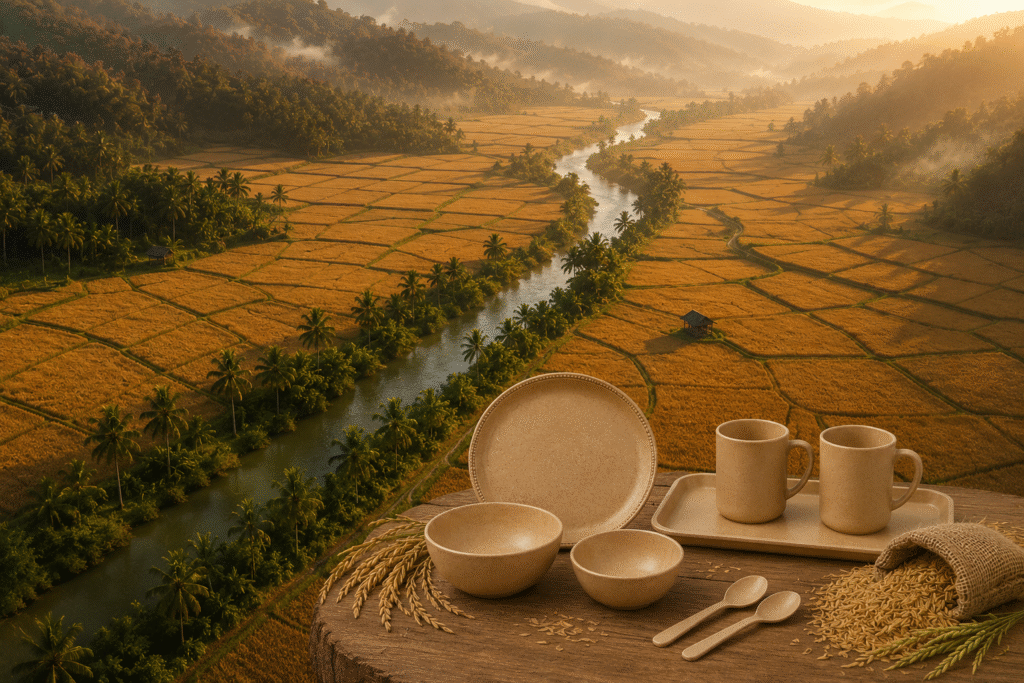
Rice husk is the protective outer layer of rice grains that is removed during milling. For decades, it has been treated as agricultural waste, often burned or discarded after harvest. However, researchers, environmental organizations, and innovative companies are increasingly recognizing rice husk as a valuable raw material capable of replacing plastic in many everyday applications.
The timing couldn’t be more important. According to the United Nations Environment Programme (UNEP), plastic pollution is a global problem, with millions of tonnes of plastic waste entering ecosystems every year.
Learn more about the global challenge here: https://www.unep.org/topics/chemicals-and-pollution-action/plastic-pollution
As we search for practical solutions, rice husk presents a compelling opportunity to transform waste into sustainable products.
What Is Rice Husk?
Rice husk, also known as rice hull or “parali,” is the hard outer shell that protects rice grains during growth.
Since rice husk accounts for approximately 20% of harvested rice weight, global rice production generates enormous quantities of this byproduct every year.
The Hidden Environmental Cost of Agricultural Waste
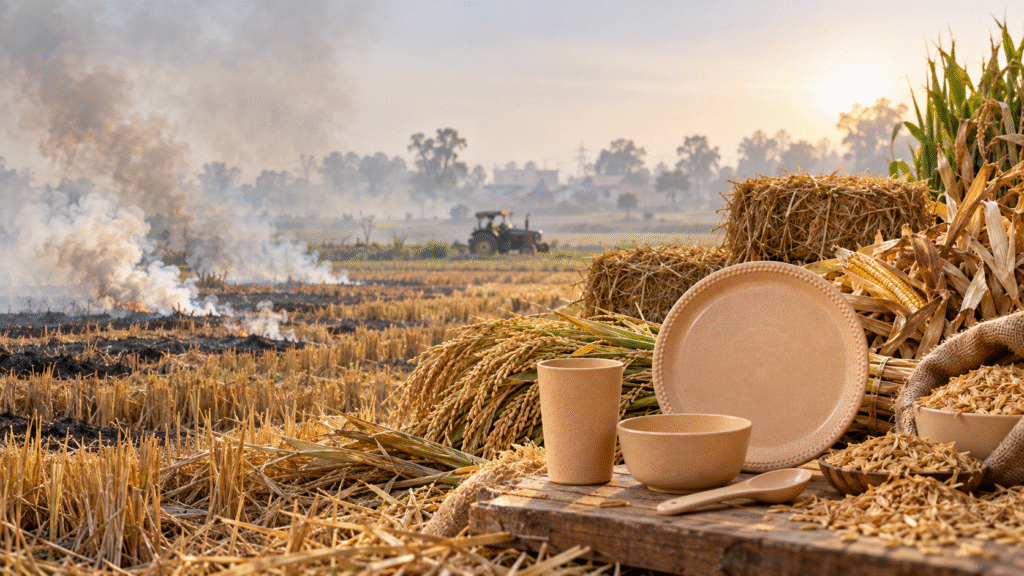
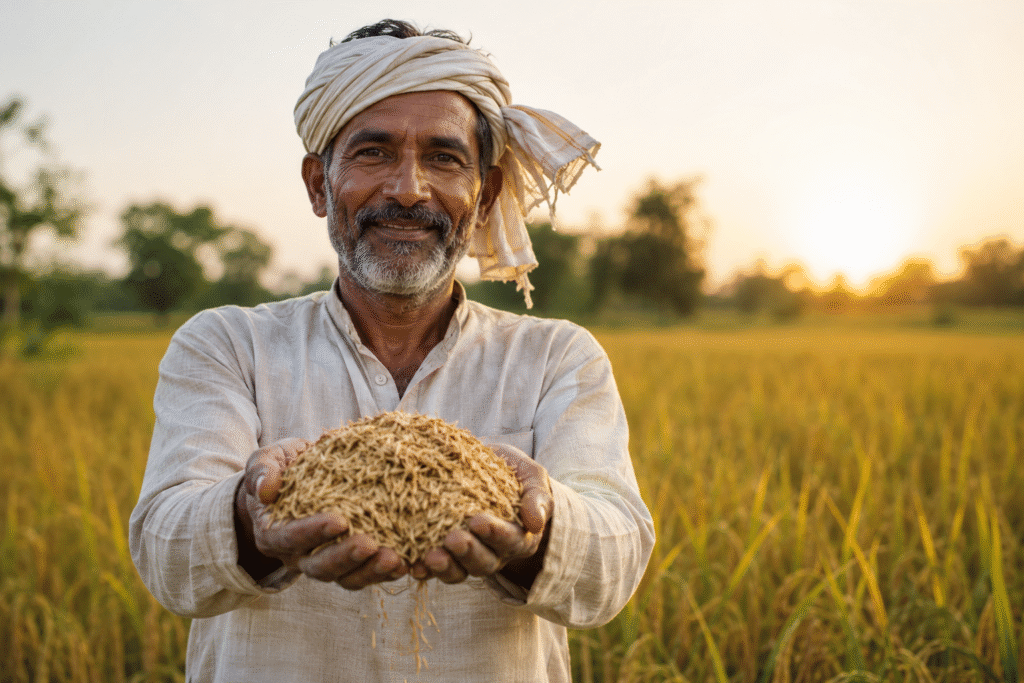
Agricultural waste is often viewed as an unavoidable byproduct of farming. Yet poor disposal practices can create significant environmental challenges.
Common disposal methods include:
- Open-field burning
- Landfilling
- Uncontrolled dumping
These practices contribute to:
- Air pollution
- Carbon emissions
- Resource inefficiency
What makes rice husk different is that it contains valuable natural components such as cellulose, lignin, and silica that can be repurposed into durable materials.
As the Ellen MacArthur Foundation explains:
“Materials never become waste.”
Read more about the circular economy here:
https://www.ellenmacarthurfoundation.org/topics/circular-economy-introduction/overview
Rice husk perfectly embodies this concept by transforming agricultural waste into useful products rather than allowing it to become pollution.
Why Rice Husk Is Emerging as a Sustainable Plastic Alternative
The world produces hundreds of millions of tonnes of plastic annually, much of which becomes waste after a single use. According to the United Nations Foundation, more than 430 million tonnes of plastic are produced each year, and a large portion quickly becomes waste.
Read:
https://unfoundation.org/blog/post/protect-our-planet-from-plastic-pollution-5-things-to-know/
Rice husk offers several advantages over conventional plastic:
- Renewable Resource
Unlike petroleum-based plastics, rice husk is generated every harvest season.
- Reduces Agricultural Waste
Instead of being burned, rice husk can be converted into valuable products.
- Lower Environmental Impact
Rice husk-based materials help reduce dependence on virgin fossil-fuel resources.
- Supports Circular Economy
Agricultural waste is transformed into functional products with extended life cycles.
- Strong and Durable
Modern bio-composite technology allows rice husk to be converted into materials suitable for everyday use.
How Rice Husk Becomes a Bio-Composite Material
The real innovation is not simply using rice husk—it’s engineering it into advanced bio-composites. Rice husk is processed and combined with natural fibers and specialized formulations to create materials that are,
- Lightweight
- Durable
- Food-safe
- Versatile
- Resource-efficient
These bio-composites can then be molded into products ranging from household goods to industrial components.
Real-World Applications of Rice Husk Products
Today, rice husk-based materials are being used in several industries, including the following:
Sustainable Tableware
- Plates
- Bowls
- Mugs
- Serving trays
- Cutlery
Packaging Solutions
- Sustainable packaging
- Protective inserts
- Shipping materials
Home & Lifestyle Products
- Storage organizers
- Decorative products
- Office accessories
Industrial Applications
- Automotive components
- Construction materials
- Engineering-grade composites
How Pacing Grass Is Converting Agricultural Waste Into Purpose
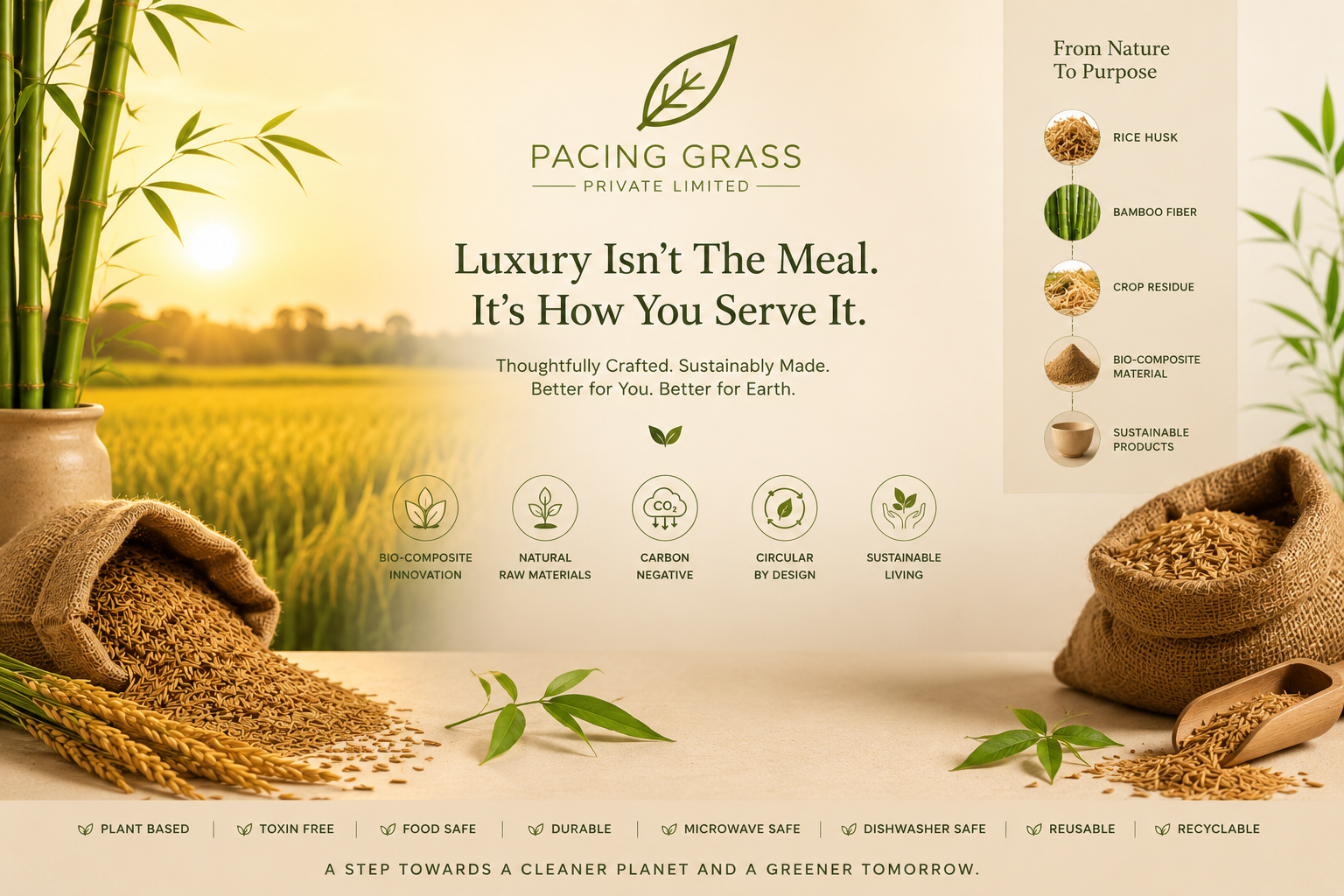
One of the most exciting examples of agricultural waste innovation is being developed by Pacing Grass.
Using patented bio-composite technology, Pacing Grass transforms agricultural residues such as rice husk, bamboo fiber, coffee husk, and crop waste into practical products designed for modern living. Their approach demonstrates how waste materials can become valuable resources instead of environmental burdens.
Products Made Using Agricultural Waste
Products currently include:
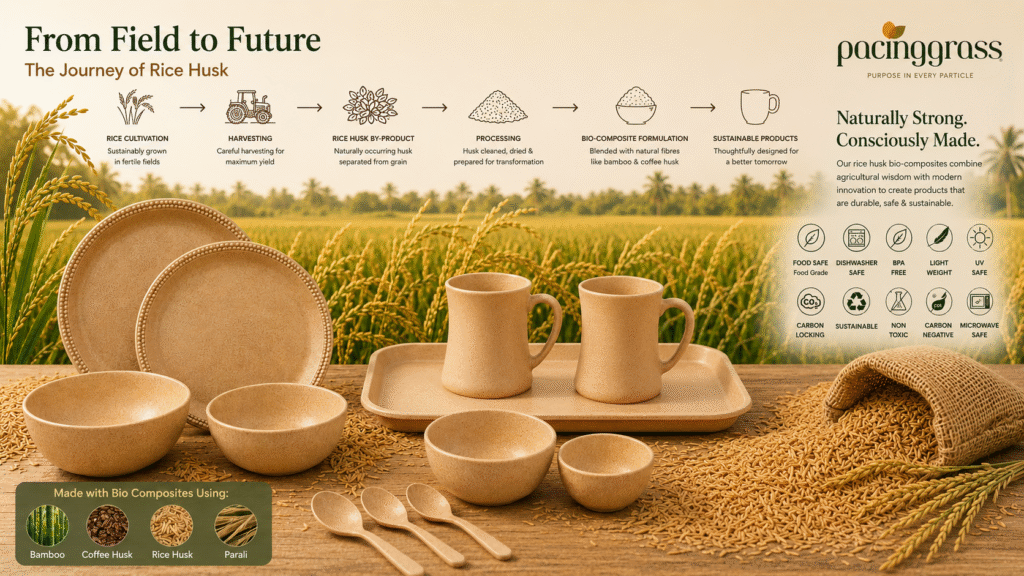
- Plates
- Bowls
- Coffee mugs
- Glasses
- Serving trays
- Kulhads
- Spoons
- Bottles
- Table organizers
These products showcase how agricultural waste can be transformed into functional alternatives to conventional plastic products.
Why This Matters
Every rice husk-based product represents the following:
- Less agricultural waste
- Reduced plastic dependency
- Better resource utilization
- Support for circular manufacturing
As UNEP highlights, our challenge is not simply managing waste but rethinking how materials are produced and used.
Challenges Facing Rice Husk-Based Materials
Despite its potential, rice husk innovation still faces several barriers.
Consumer Awareness
Many consumers remain unfamiliar with bio-composite materials.
Manufacturing Scale
Large-scale production requires investment and infrastructure.
Market Competition
Traditional plastics continue to benefit from established supply chains and lower costs.
Industry Standards
Bio-composite regulations and standards are still evolving globally.
However, growing environmental awareness and stricter regulations are accelerating adoption.
The Future of Rice Husk Innovation
The future of sustainable manufacturing will likely depend on how effectively we utilize existing resources.
Rice husk is increasingly being explored for:
- Sustainable packaging
- Construction materials
- Automotive applications
- Consumer products
- Industrial bio-composites
The shift aligns closely with circular economy principles, where materials remain in use for as long as possible rather than becoming waste.
As environmental organizations continue pushing for solutions to plastic pollution, agricultural waste-based materials are expected to play a larger role in the global sustainability transition.
Conclusion
Rice husk is a powerful reminder that today’s waste can become tomorrow’s resource.
What was once considered an agricultural byproduct is now emerging as a promising alternative to plastic, offering environmental, economic, and social benefits. Through innovation, design, and responsible manufacturing, rice husk can help reduce plastic pollution while creating value from materials that would otherwise be discarded.
Companies such as Pacing Grass are demonstrating that agricultural waste is not merely something to manage—it is something to build with, innovate with, and grow with.
The next time you see a grain of rice, remember that its protective outer shell could help shape a more sustainable future.