



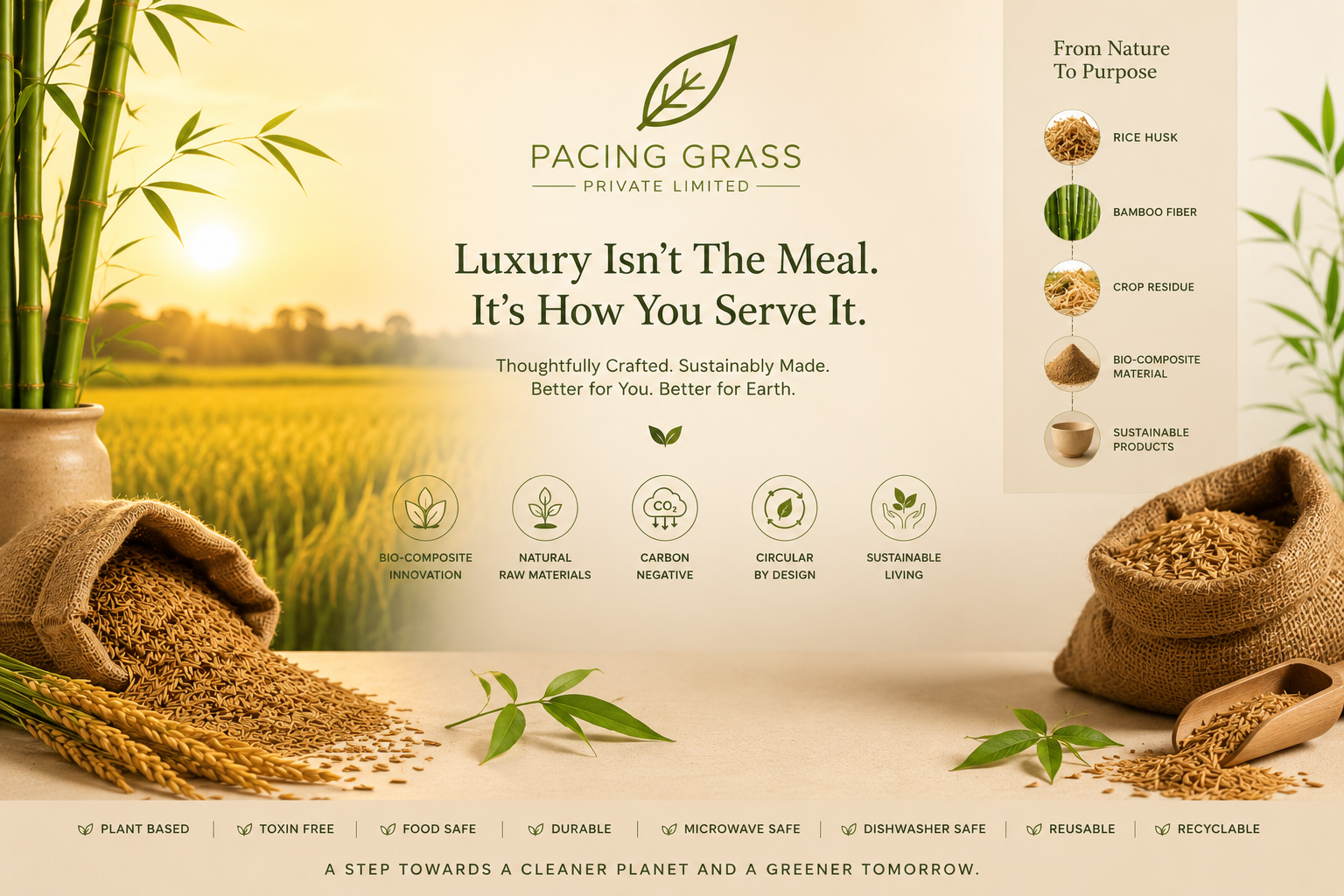
Every grain of rice you eat grew inside a hard outer shell. At the rice mill, that shell, the rice husk, is removed and piles up by the tonne. India is one of the world’s biggest rice producers, so rice husk is one of the country’s most abundant agricultural by-products. For a long time much of it was burned or dumped. Today it’s finding its way into fuel, buildings, packaging and even the plates on your table.
Here are nine ways rice husk is used, and why it matters.
Rice husk vs parali: what’s the difference?
They’re often confused. Parali is the straw and stubble left in the field after harvest. Rice husk is the thin shell around each grain, removed later at the mill. Both are crop residues, but they’re collected in different places and used in different ways. Read what is parali for the field side of the story.
1. Fuel for boilers and power
Rice husk burns steadily, so mills and nearby industries use it as boiler fuel, and some biomass power plants run on it. It’s one of the most common uses in rice-growing states.
2. Rice husk ash in cement and concrete
When husk is burned under controlled conditions, the ash is rich in silica. Rice husk ash can replace part of the cement in concrete and is used in some construction materials.
3. Bricks and building boards
Husk is mixed into bricks and pressed into panels and boards as a filler, making them lighter. Some Indian startups now make composite panels from rice husk and other residues.
4. Packaging material
Researchers and startups are developing moulded packaging and films from rice husk as an alternative to plastic and thermocol. Much of this is still at an early stage in India, but it’s one of the most promising areas.
5. Animal bedding and poultry litter
Dry husk absorbs moisture well, so farmers use it as bedding for poultry and livestock.
6. Soil improvement and gardening
Husk and partly burned husk (rice husk biochar) are added to soil and potting mixes to improve drainage and aeration. Gardeners often mix it into compost.
7. Insulation
Because it’s light and traps air, rice husk has been used as loose insulation in walls and roofs, and in cold-storage boxes in rural areas.
8. Silica and industrial products
The high silica content of husk ash makes it a raw material for industrial silica used in rubber, ceramics and other products.
9. Reusable tableware
Rice husk can be ground and combined with other plant fibres to make durable products. At Pacing Grass, we use crop residue such as rice husk and coffee husk, together with bamboo fibre, to make reusable dinnerware, mugs and kulhads and serveware. A plate that’s used for years puts the residue to work for a long time. Read rice husk: the agri-waste that can replace plastic for the bigger picture.
Why finding uses for rice husk matters
Every use above gives a crop by-product a value. When residues have buyers, they’re less likely to be dumped or burned in the open, and the products made from them can replace materials that take more energy or resources to produce. That’s the idea behind a circular economy, and it’s why we started Pacing Grass. Read our story.
Frequently asked questions
What is rice husk used for?
Fuel, rice husk ash for cement and concrete, bricks and boards, packaging, animal bedding, soil improvement, insulation, industrial silica and reusable products like tableware.
Is rice husk the same as rice bran?
No. Husk is the hard outer shell, which isn’t eaten. Bran is the softer layer under the husk, removed when brown rice is polished into white rice, and it’s used for oil and animal feed.
Can rice husk replace plastic?
For some uses, yes. Rice husk is being combined with other materials to make packaging and durable products that can replace some plastic items.