



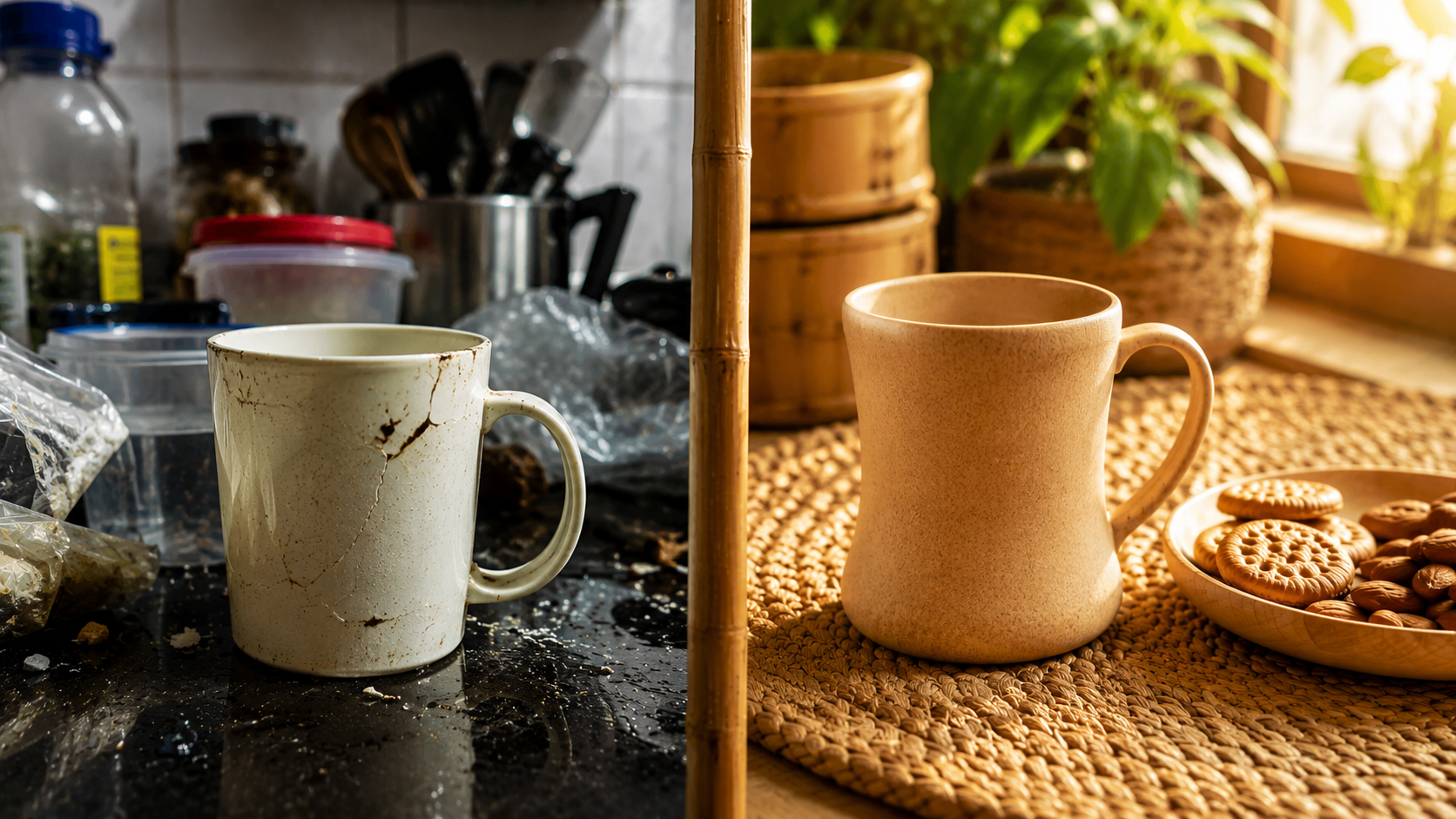
9 Out of 10 Indian Homes Still Believe—Is Yours One of Them?
You carry a reusable tote bag every time you visit the sabzi mandi.
You say no to single-use plastic straws at cafés.
You carry your own reusable water bottle and try to reduce plastic waste wherever you can.
Maybe you even separate your dry and wet waste because you genuinely want to live a more eco-friendly lifestyle.
It feels like you’re making all the right sustainable choices.
But then every single morning, without even thinking about it, you pour piping hot chai or coffee into a plastic mug or melamine cup and continue your day.
No second thought.
No questions asked.
Just another part of your daily breakfast routine.
And that’s where the biggest gap between sustainable living and everyday habits begins.
Most of us focus on obvious eco-friendly swaps—reusable shopping bags, stainless steel bottles, bamboo toothbrushes—but rarely question the kitchenware we use every single day.
The mug for your morning tea.
The bowl for your breakfast.
The plate your family uses daily.
These everyday products are often ignored, even though they come into contact with hot food and beverages multiple times a day.
We’ve grown up believing things like:
“It’s reusable, so it’s sustainable.”
“We’ve been using melamine for years, so it must be safe.”
“It’s just one cup of chai. What difference does it make?”
They sound completely reasonable.
And because they’re repeated so often, they become accepted as facts.
But are they really true?
The reality is that eco-friendly living isn’t just about avoiding plastic bags or carrying a reusable bottle.
It’s also about choosing safe, sustainable kitchenware made from natural materials that are designed for everyday use.
The products we eat from and drink from deserve just as much attention as the products we carry outside.
In this post, we’re breaking down 5 common sustainable breakfast myths that many Indian households still believe.
We’ll separate facts from misconceptions, explain what actually matters, and show how a few small changes can create a healthier and more environmentally friendly kitchen.
Because sometimes, becoming more sustainable doesn’t require changing your entire lifestyle.
It starts with a simple 30-second eco-friendly swap—like replacing your everyday plastic or melamine mug with a bamboo fibre mug or other sustainable tableware.
Small habit.
Big impact.
Let’s get into it.
Myth 1 — My Mug Is BPA-Free, So It Is Safe
BPA-free is the wellness buzzword that did its job a little too well.
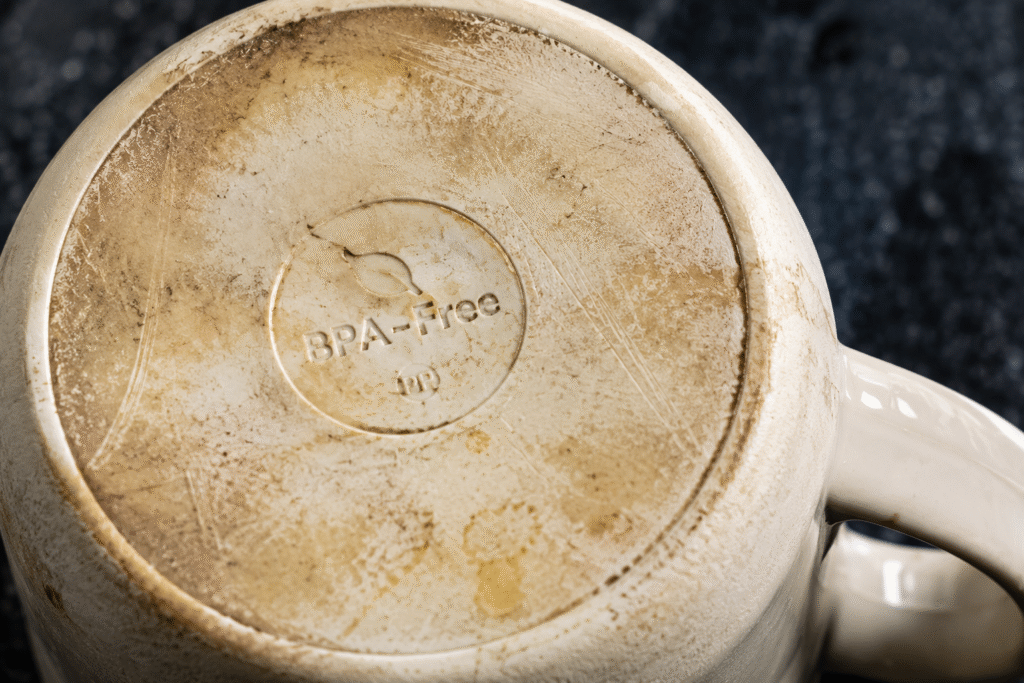
Walk into any store, and you’ll see “BPA-Free” printed on mugs, bottles, lunch boxes, and food containers. It sounds reassuring, and most people assume it means the product is completely safe for hot food and beverages.
But that’s only part of the story.
When Bisphenol A (BPA) faced growing consumer concerns, many manufacturers replaced it with similar chemicals like BPS (Bisphenol S) and BPF (Bisphenol F). While the label changed, the replacement chemicals have raised similar concerns in scientific research for their potential impact on hormonal activity.
There’s another issue that often gets overlooked.
Even BPA-free plastic isn’t automatically the best choice for serving hot tea, coffee, or boiling milk. As the temperature rises, especially around 85–90°C—the temperature of a freshly brewed cup of chai—the likelihood of chemical leaching and microplastic release can increase, particularly in low-quality or worn plastic products.
That’s why the phrase “BPA-Free” should never be treated as a guarantee of complete safety.
Myth
“BPA-Free plastic is completely safe for everyday hot drinks.”
Truth
BPA-Free simply means Bisphenol A has been removed. It does not guarantee that the product is free from other chemicals, microplastic release, or chemical leaching. The safety of food-grade plastic, especially for hot beverages, depends on the overall material quality, manufacturing process, and how the product behaves under heat—not just a single label.
A truly safe reusable coffee mug specifies what it is made of, not just what it does not contain.
Myth 2—Steel and Ceramic Are Always the Better Choice
When people think of eco-friendly kitchenware, steel and ceramic are often the first materials that come to mind.
And to be clear—stainless steel is durable, reusable, and can last for decades with proper care. Ceramic also has its place in many homes.
But here’s where the conversation about sustainable materials often stops.
Sustainability isn’t determined by a material’s popularity—it’s determined by its entire lifecycle.
Producing stainless steel requires mining raw materials, followed by energy-intensive smelting, refining, and manufacturing. These processes consume significant amounts of energy and contribute to carbon emissions before the product even reaches your kitchen.
Ceramic tableware, while long-lasting, is fired in high-temperature kilns that require substantial energy. It’s also more prone to chipping and breaking than many people realise, leading to replacements that increase its overall environmental footprint.
Now compare that with products made from renewable bamboo fibre and agricultural waste.
Instead of relying entirely on newly extracted raw materials, many bamboo fibre products make use of fast-growing bamboo and agricultural by-products that might otherwise be discarded or burned. This supports a more circular economy by giving natural waste materials a second life and reducing dependence on virgin resources.
That doesn’t mean you should throw away your steel tumbler or ceramic mug.
In fact, the most sustainable product is often the one you already own and continue using.
But if you’re buying something new, it’s worth looking beyond the material’s reputation and considering its complete environmental impact.
Myth
“Steel and ceramic are always more sustainable than bamboo.”
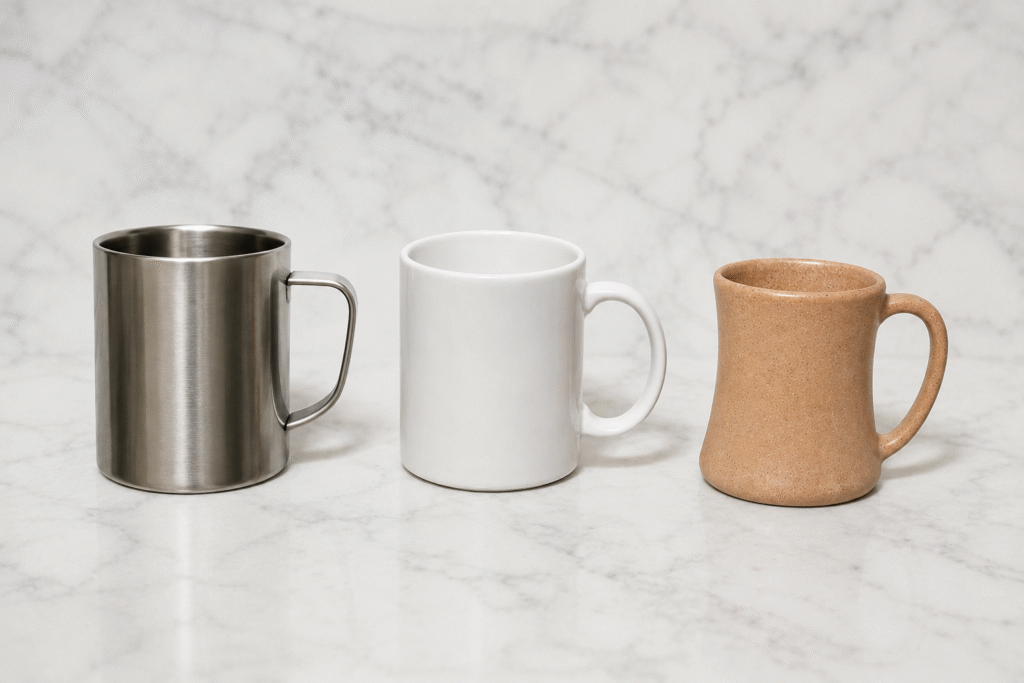
| Truth Sustainable kitchenware should be evaluated across its entire lifecycle—from raw material sourcing and manufacturing to daily use, durability, and end-of-life disposal. Bamboo fibre tableware made from renewable bamboo and agricultural waste can offer a lower environmental footprint than products made from newly extracted steel or energy-intensive ceramic production, depending on how they’re manufactured and used. |
Myth 3 — My Kitchen Choices Do Not Really Affect My Carbon Footprint
When we talk about reducing our carbon footprint, the conversation usually revolves around electric cars, solar panels, or cutting down on flights.
Rarely does anyone mention the mug you drink from every morning.
Or the bowl you use for breakfast.
Or the plate that’s on your dining table every single day.
These choices seem too small to matter.
But sustainability isn’t built on one big action—it’s built on thousands of small, repeated habits.
Think about it.
A typical Indian household uses its kitchenware multiple times every day. Over the years, many plastic and melamine products become scratched, stained, or worn out and are replaced, creating an ongoing demand for new raw materials, manufacturing, packaging, transportation, and eventual disposal.
One plastic mug may not seem significant.
But when millions of households repeat the same purchasing cycle, the collective environmental impact becomes much larger than it appears.
That’s why experts often focus on high-frequency habits. The things we do every day have a greater cumulative impact than the things we do once in a while.
Your carbon footprint isn’t defined by a single decision.
It’s the sum of hundreds of everyday choices—what you buy, what you reuse, what you replace, and what you throw away.
The products you use in your kitchen every morning may not be the biggest source of emissions, but they’re among the easiest places to make a more sustainable choice.
Myth
“Kitchen swaps are too small to make a real difference.”
Truth
Small actions become powerful when they’re repeated every day. Choosing eco-friendly kitchenware, sustainable tableware, or bamboo fibre products instead of frequently replacing plastic alternatives can help reduce waste over time and support a more sustainable lifestyle. Consistent habits create measurable environmental impact—one breakfast, one cup of chai, and one household at a time.
Myth 4: Eco-Friendly Kitchen Products Are Fragile and High Maintenance
This is the myth that keeps most people from making the switch.
The assumption: eco-friendly means delicate. Bamboo products sound like they will splinter, absorb stains, or fall apart in the dishwasher.
Bio-composite bamboo crockery—the kind made from compressed bamboo fibre with food-grade binding—is structurally stronger than most people expect.
- Dishwasher safe at standard wash cycle temperatures (65–70°C).
- Microwave safe — tested, not assumed.
- Does not absorb odours or stain under normal use.
- No special storage or care required. Use it like any other daily piece of crockery.
The maintenance myth comes from confusing raw bamboo (which does absorb moisture) with engineered bamboo composites (which do not behave the same way at all).

| MYTH 4: Bamboo kitchenware needs special care and breaks easily. TRUTH: Bio-composite bamboo crockery is built for daily use—it’s dishwasher-safe, microwave-safe, and structurally durable. It is not decorative. It is functional. |
Myth 5 — Sustainable Products Are Always Imported and Expensive
One of the biggest reasons people hesitate to switch to eco-friendly kitchenware is the assumption that sustainable products are either imported, overpriced, or only meant for luxury lifestyles.
And honestly, that belief made sense for a long time.
For years, many sustainable home products available in India were imported. By the time they reached Indian consumers, the cost included international shipping, import duties, packaging, and retailer markups. Ironically, some products marketed as “eco-friendly” also carried a significant transportation footprint before they even arrived on store shelves.
But the story is changing.
India is home to one of the world’s largest reserves of renewable bamboo. Every year, millions of tonnes of agricultural waste—including rice husk, coffee husk, and paddy straw (parali)—are generated across the country. Much of this biomass is either burned, contributing to air pollution, or discarded as waste.
What if these natural resources could be transformed into everyday products instead of becoming environmental problems?
That’s exactly where innovation is making a difference.
Today, Made in India sustainable kitchenware is proving that eco-friendly products don’t have to be imported or expensive. By using locally available bamboo and agricultural by-products, manufacturers can reduce waste, support a circular economy, and create products with a lower environmental footprint.
Sustainability isn’t just about where a product ends up.
It’s also about where it begins.
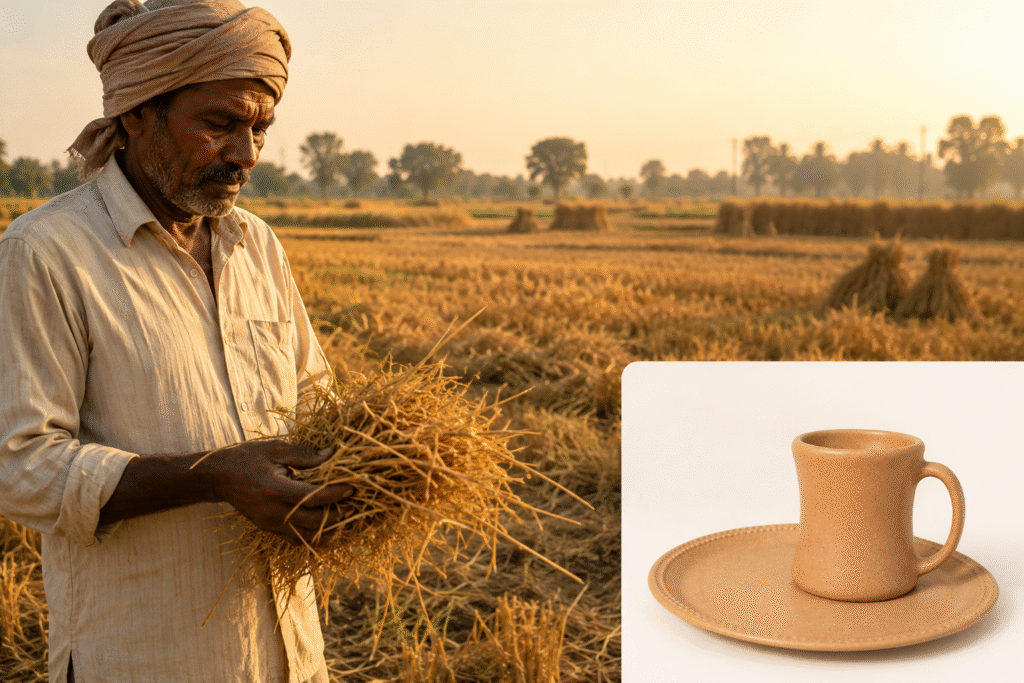
So, What Does the Switch Actually Look Like?
Myth
“Sustainable products are always imported and expensive.”
Truth
India already has the natural resources needed to produce high-quality eco-friendly kitchenware. Products made from bamboo fibre and agricultural waste can be manufactured locally, reducing transportation emissions while supporting Indian innovation and responsible manufacturing.
So, What Does the Switch Actually Look Like?
It isn’t about changing your entire lifestyle overnight.
It isn’t about replacing everything in your kitchen.
Sometimes, sustainable living starts with something as simple as the mug you hold every morning.
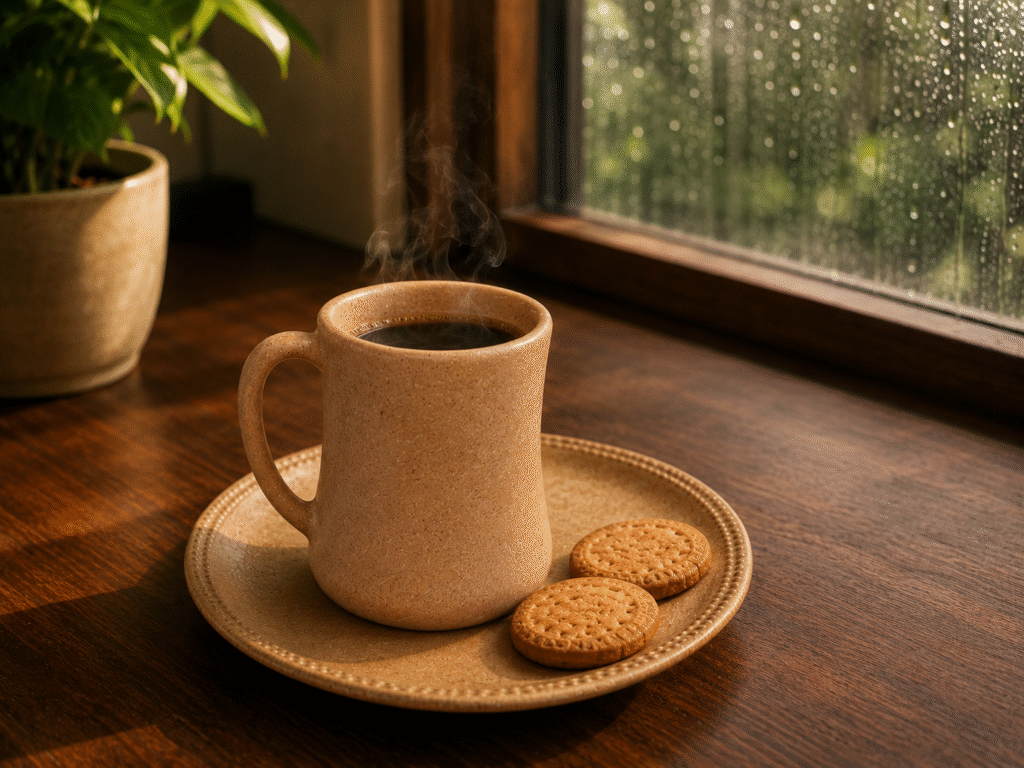
Imagine replacing your everyday plastic or melamine mug with a bamboo fibre coffee mug and pairing it with a matching eco-friendly snack plate.
That’s it.
One small change that becomes part of your daily routine.
At Pacing Grass, we’ve designed our Bamboo Breakfast Set using our patented bio-composite technology, made from bamboo fibre, rice husk, coffee husk, and parali (paddy straw)—materials that would otherwise have little value after harvest.
Our products are:
- Made without melamine, BPA, or formaldehyde
- Designed for everyday use
- Microwave safe
- Dishwasher safe
- Lightweight, durable, and reusable
- Proudly Made in India at our manufacturing facility in Ghaziabad, Uttar Pradesh, by a team incubated at IIT Kanpur’s SIIC
The goal isn’t to ask you to change your mornings.
It’s simply to change what your morning cup is made of.
Because sustainability doesn’t always begin with a big decision.
Sometimes, it begins with the first cup of chai.
Back to the Question—Is Your Home One of the 9?
Are You Still Believing These Sustainable Breakfast Myths?
Probably.
Not because you don’t care about the environment.
Not because you’re ignoring sustainability.
But because these myths have become part of everyday life. They’ve been repeated so often that they feel like facts.
You saw “BPA-Free” on a label and assumed it meant completely safe.
You believed stainless steel was automatically the most sustainable option.
You thought bamboo kitchenware wouldn’t last.
You assumed eco-friendly products were expensive imports made for a niche audience.
None of these assumptions is unusual.
In fact, they’re incredibly common.
The good news is that sustainable living isn’t about getting everything right from day one. It’s about learning, making informed choices, and improving one habit at a time.
A sustainable breakfast doesn’t require a complete kitchen makeover.
It starts with one conscious decision that you repeat every morning.
The mug you drink from.
The bowl you eat from.
The plate you serve your breakfast on.
Small choices may seem insignificant on their own, but repeated every single day, they create a meaningful impact—for your home, your family, and the environment.
You don’t have to be perfect.
You just have to start.
Start with what’s already in your hand.
About Pacing Grass
Pacing Grass Private Limited is an IIT Kanpur SIIC-incubated startup building the next generation of eco-friendly kitchenware and sustainable tableware using patented bio-composite technology.
Our products are made from bamboo fibre, rice husk, coffee husk, and parali (paddy straw)—renewable agricultural by-products that help reduce waste while creating durable, reusable everyday essentials.
From your morning chai to everyday meals, our mission is simple: make sustainable living practical, accessible, and proudly Made in India.
Why Pacing Grass?
📺 Featured on DD Kisan
🌿 Made from bamboo fibre and agricultural waste
♻️ BPA-free, melamine-free, and formaldehyde-free
☕ Microwave-safe and dishwasher-safe
🇮🇳 Proudly Made in India (Ghaziabad, Uttar Pradesh)
🏆 Winner of Bharat Pitchathon 2023
🚀 Incubated at IIT Kanpur SIIC
Great content! Keep up the good work!