



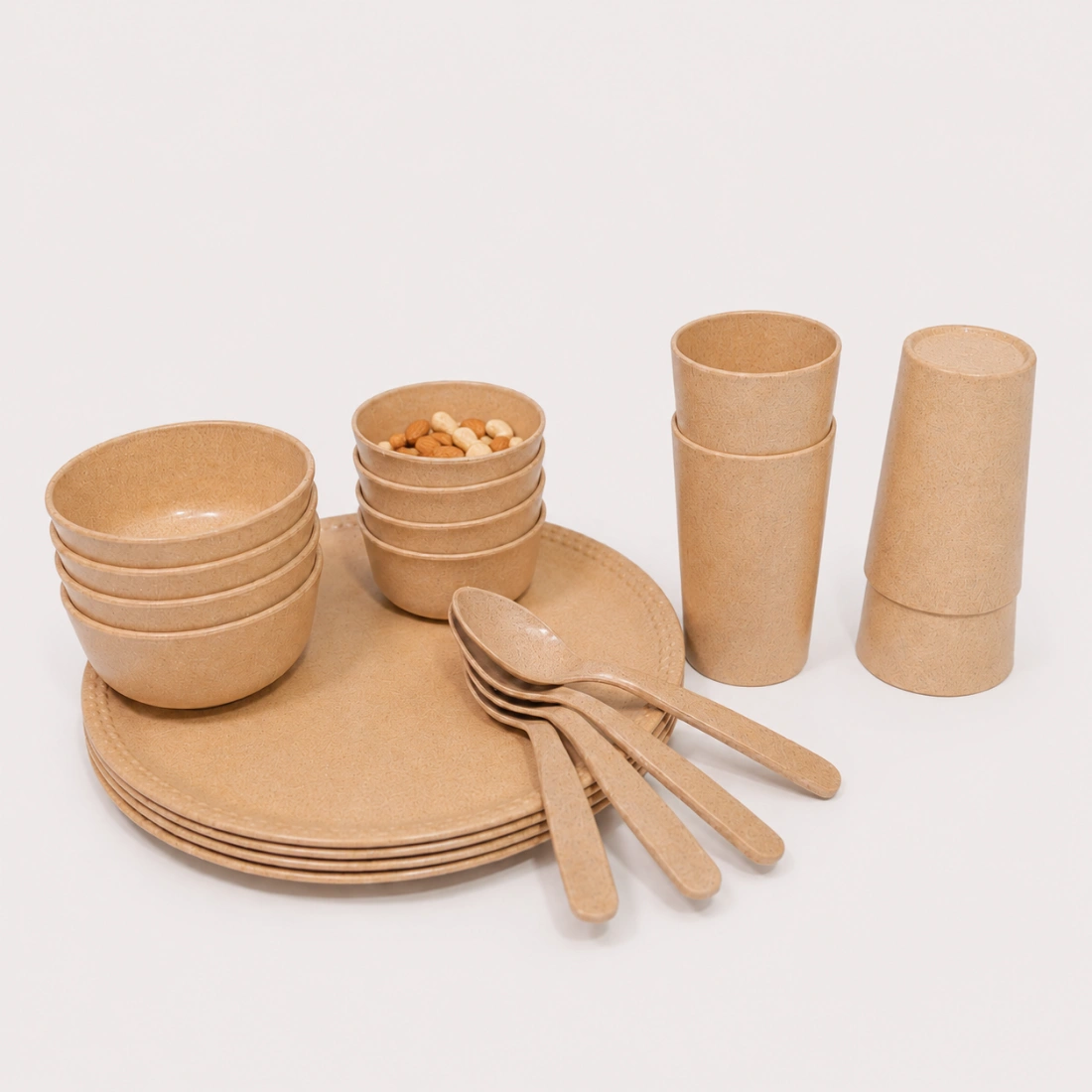
Shopping for a bamboo dinner set in India usually starts with a simple wish: plates and bowls that are light, reusable and good-looking enough for guests. Then the listings arrive, all calling themselves “bamboo”, at prices that range from a few hundred rupees to a few thousand. This guide explains what the word actually covers, how many pieces your household needs, which sizes suit Indian meals, and the questions worth asking any seller before you pay.
Some context first. Since 1 July 2022, India has banned a list of single-use plastic items, including plastic plates, cups, glasses and cutlery, under the Plastic Waste Management (Amendment) Rules, 2021, as announced by the Central Pollution Control Board and the Press Information Bureau. That ban covers disposables, not your everyday crockery, but it has pushed many households to think harder about tableware they can use for years rather than throw away after one party.
What a bamboo dinner set in India is actually made of
“Bamboo tableware” is a label, not a single material. Most products sold under it fall into one of three groups, and the difference matters more than the colour or the pattern.
1. Solid bamboo
These pieces are carved or pressed from bamboo itself, or made from thin strips glued together and finished with a coating. They look and feel like wood, with visible grain. Solid bamboo is common for serving trays, salad bowls and spoons, and less common for full dinner sets because large, flat plates are hard to make this way.
2. Bamboo-fibre composites
Here, bamboo is ground into a fine powder or fibre, mixed with a binder (a resin that holds the fibres together), and moulded under heat and pressure. This is how most smooth, coloured “bamboo” plates and mugs are made. The fibre gives bulk and texture; the binder gives shape and strength. Without a binder, loose fibre would not hold together as a plate.
3. Bio-composites with rice husk and crop residue
A newer group uses a blend of plant fibres and farm by-products, such as rice husk, coffee husk or other crop residue, sometimes alongside bamboo fibre. These also need a binder. The appeal is that they put agricultural leftovers to use; we have written about why rice husk is getting attention as a material and about how bio-composites fit into India’s move away from plastic.
Pacing Grass tableware belongs to this composite family: it is made with bamboo fibre, rice husk and crop-residue bio-composites. For any composite, from any brand, the binder is the part you cannot see and the part worth asking about. More on that below.
How many pieces do you need? Choosing by household size
A dinner set is only useful if it matches how many people eat together on an ordinary day, plus a little room for guests. A practical rule: count the people who eat at home daily, then decide how many items each person uses in a typical meal. For most Indian homes that means one plate, one or two bowls and a spoon.
Here is how the Pacing Grass sets map to household size. Prices are at the time of writing and per-person figures are rounded.
| Household | Set | Pieces | Price | Approx. per person |
|---|---|---|---|---|
| Couple | Bamboo Dinnerware Pair | 6 (2 plates, 2 bowls, 2 spoons) | ₹1,059 | ₹530 |
| Couple | Couple Dinner Set | 10 | ₹1,319 | ₹660 |
| Family of 4 | Bamboo Dinnerware Set for 4 | 12 | ₹1,325 | ₹331 |
| Family of 4 | Eco-Family Dinner Set | 20 | ₹2,088 | ₹522 |
| Family of 6 | Family Dinnerware Set | 18 | ₹1,718 | ₹286 |
For a couple
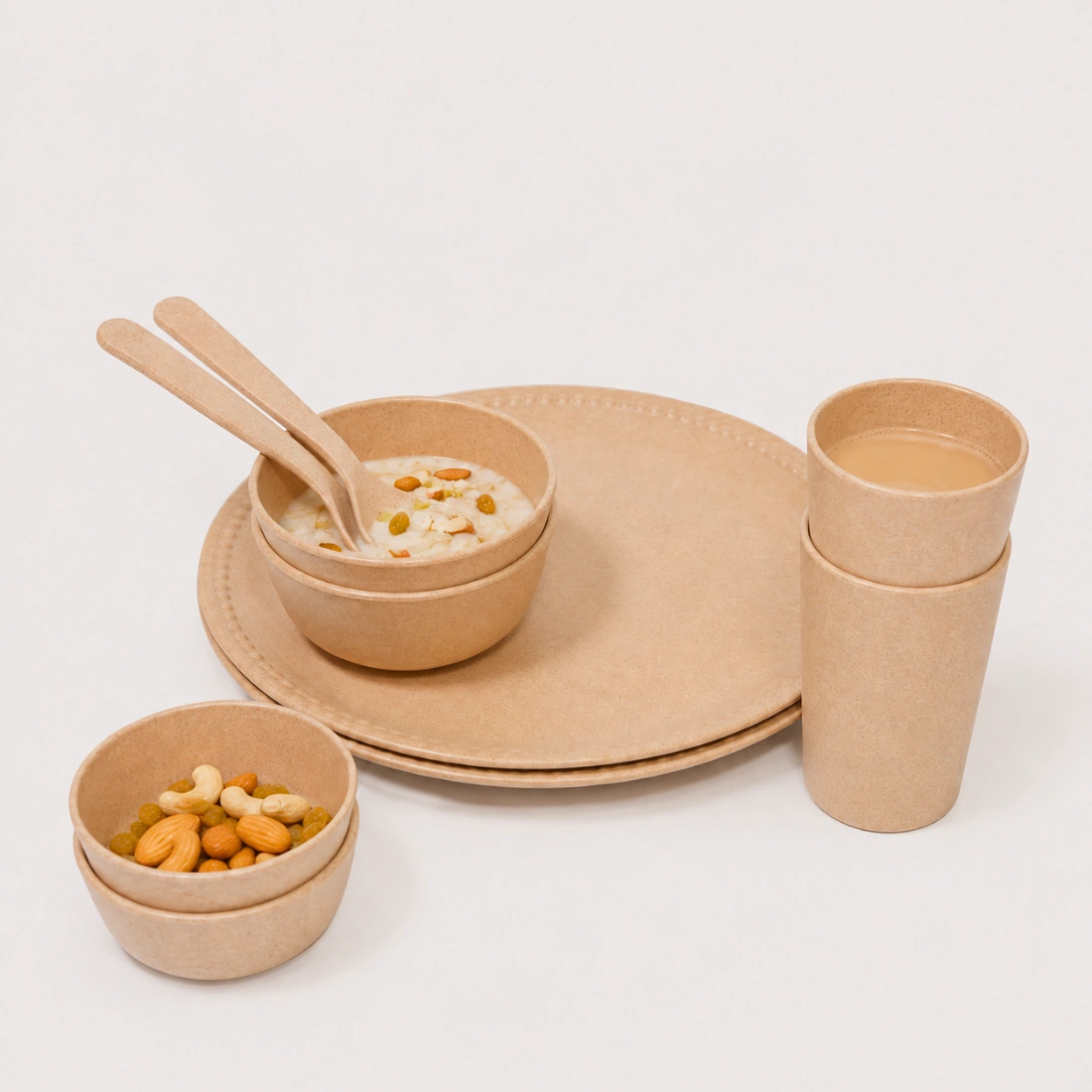
If you mostly eat simple meals, the 6-piece pair covers the basics: a plate, a bowl and a spoon each. The 10-piece Couple Dinner Set gives you a few extra pieces for days when there is dal and sabzi on the same plate. A bamboo dinner set for a couple also makes a sensible housewarming gift for people setting up their first home.
For a family of four
How many pieces in a dinner set for 4? Twelve gives each person three items, which is enough for a plate-bowl-spoon routine. Twenty gives five items each, which is more comfortable if your meals usually involve two or three katoris alongside the main plate. If you can only buy one, think about how many bowls end up in the sink after a normal dinner.
For a family of six or more
The 18-piece Family Dinnerware Set has the lowest per-person cost in the range. Larger joint families often combine it with an extra bowl set, since bowls run out first.
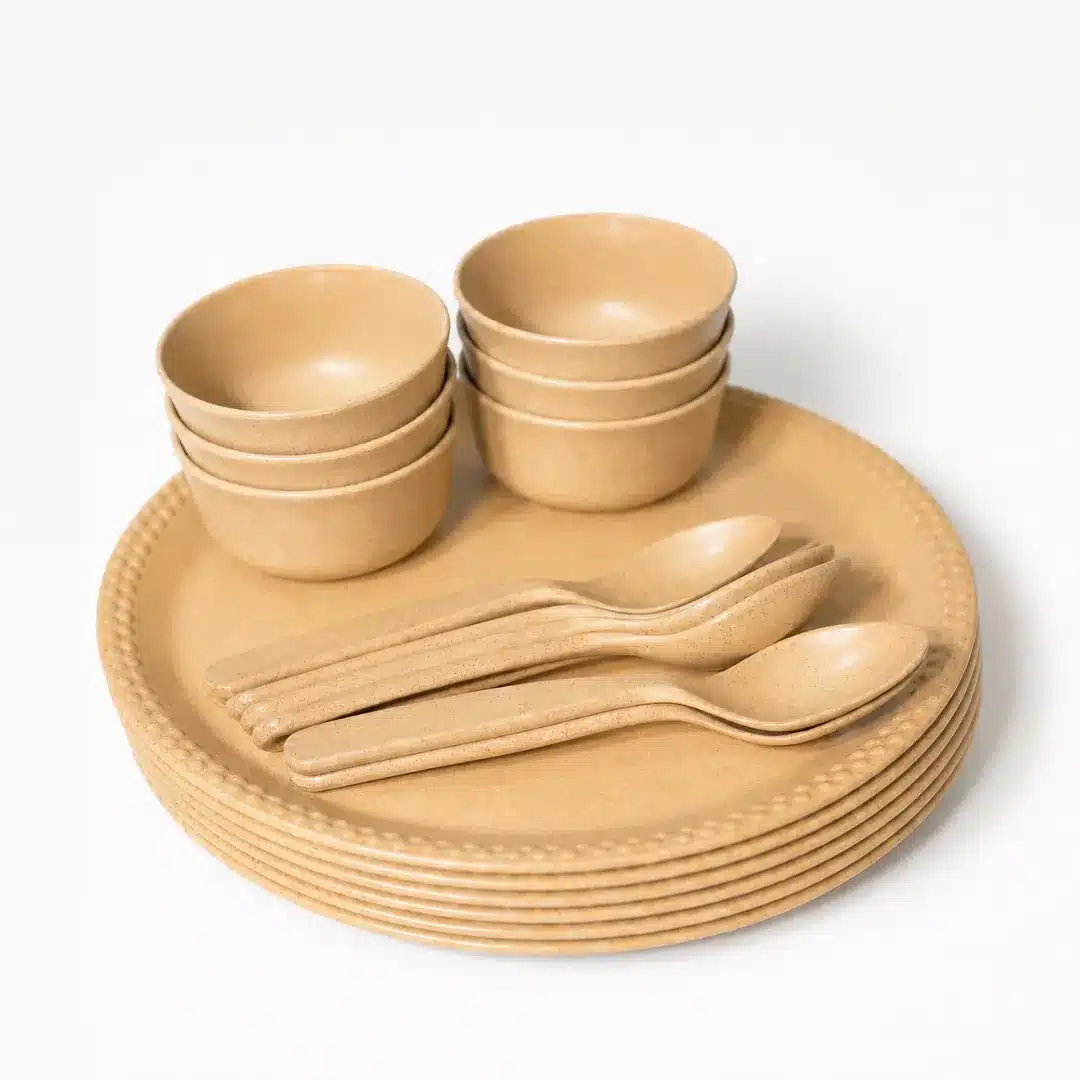
Plate and bowl sizes that suit Indian meals
Western dinner sets assume one main plate and maybe a side. Indian meals work differently. A weekday lunch might be rice, two rotis, dal, a dry sabzi, curd and pickle, which is a lot to fit on one surface. Sizes matter more than piece counts.
- Dinner plates, around 10.5 inches: big enough for rice and rotis with room for a katori or two. The Bamboo Dinner Plates come in a set of six at this size for ₹934, which works if you want to use them as a thali-style base and add your own bowls.
- Side plates: useful for breakfast, snacks, rotis kept aside, or serving sweets to guests.
- 300ml bowls: the everyday katori size for dal, sabzi, raita or curd. The Dinner Bowl Set of 8 (₹683) is a good top-up when bowls are always short.
- 750ml bowls: closer to a meal bowl, for khichdi, poha, noodles, salads or a one-bowl dinner. See the Meal Bowl Set (₹745 for four, with spoons).
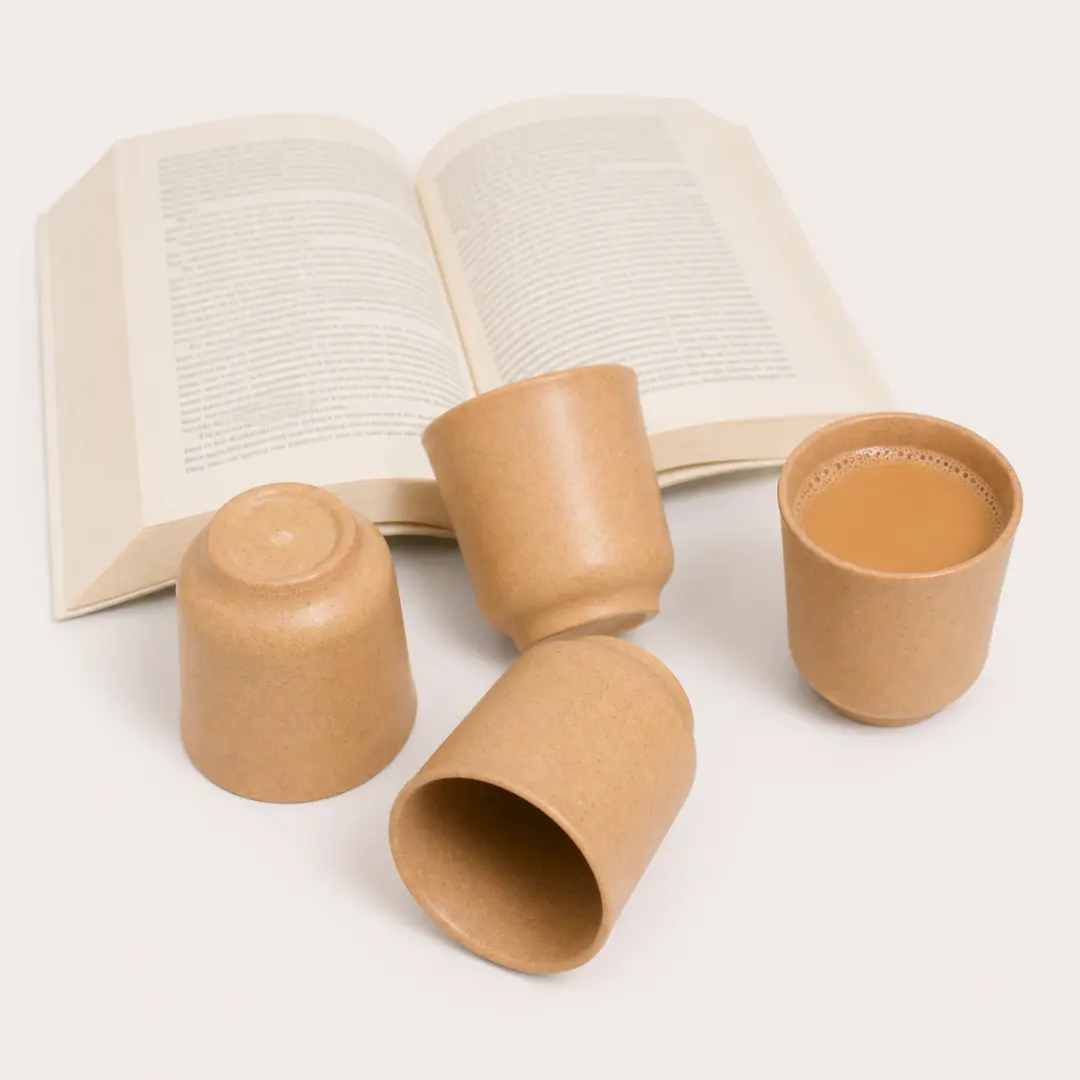
- Kullads, around 160ml: a familiar chai-cup size. The Set of 4 Bamboo Chai Kullads is ₹331.
A simple way to build a complete bamboo crockery set: start with a dinner set sized to your household, then add the one item you always run short of, usually bowls or cups.
Budget ranges at a glance
Using the prices above, here is roughly what different budgets buy:
- Under ₹1,000: individual pieces rather than full sets, such as a set of six dinner plates (₹934), eight bowls (₹683) or four kullads (₹331).
- ₹1,000 to ₹1,500: a complete set for a couple or a basic 12-piece set for four.
- ₹1,500 to ₹2,100: the 18-piece set for six, or the 20-piece set for four with more bowls per person.
You can compare every set side by side on our bamboo dinnerware page, or browse the full range on the all products page.
Care and cleaning basics
Composite tableware lasts longer with gentle handling. General guidance that applies to most bamboo and plant-fibre dinnerware:
- Hand wash with a soft sponge and mild dishwashing liquid.
- Avoid steel wool and abrasive scrubbers, which scratch the surface.
- Do not leave pieces soaking for long periods. Rinse and wash soon after the meal, especially after turmeric-heavy curries.
- Dry fully before stacking.
- Never place them on a gas flame, tawa or hot stovetop.
- For dishwashers, microwaves and very hot food or drinks, follow what the seller states in writing for that specific product, and ask if it is not stated.
Why the binder deserves a question
Regulators in Europe have looked closely at bamboo tableware. In 2019, Germany’s Federal Institute for Risk Assessment (BfR) reviewed test data on “bamboo ware”, which it described as melamine-formaldehyde resin with bamboo fibre as filler. It found that some cups and bowls released melamine and formaldehyde into food at higher temperatures, and advised against using such products for hot drinks and meals. The BfR considered them fine for cold or lukewarm food.
A 2025 study summarised by the Food Packaging Forum tested bio-based tableware bought in Europe. It reported melamine or related compounds in 20 of 21 bamboo-labelled samples, with migration above EU limits in six products. The same summary notes that the EU stopped allowing bamboo and other plant-based additives in plastic food-contact materials in 2021.
None of this means every bamboo product is a problem. Binders vary, and so do manufacturing standards. It does mean “bamboo” on the label tells you about the filler, not the whole recipe. A responsible seller should be able to answer plainly.
Questions to ask any seller before you buy
Use this checklist with any brand, including us. A good seller will not be offended.
- What binder or resin holds the fibres together? Ask for the name of the material, not a general phrase like “natural” or “eco”.
- Is there a food-contact migration test report, and can you share it? Ask which standard it was tested against (for example, Indian or EU limits), which lab did it, and when.
- What temperatures is it rated for? Hot dal, fresh chai and microwave reheating are very different from serving fruit or salad.
- Is it dishwasher or microwave rated, and on what basis? A claim should come with a test, not just an icon.
- How should I dispose of it at the end of its life? Ask whether it goes in dry waste, whether any take-back exists, and whether a compostability claim is certified.
If you would like these answers from Pacing Grass, write to us through the contact page.
Frequently asked questions
How many pieces should a dinner set for 4 have?
A 12-piece set gives four people three items each, usually a plate, a bowl and a spoon, which suits simple daily meals. If your meals usually include dal, sabzi and curd in separate katoris, a set with around 20 pieces is more comfortable. Many families also add a separate bowl set, because bowls are the first thing to run short.
What is the difference between bamboo fibre and bio-composite plates?
Bamboo fibre plates use powdered bamboo mixed with a binder and moulded under heat. Bio-composite plates use a similar process but blend in other plant materials, such as rice husk, coffee husk or crop residue. Both need a binder to hold their shape, so the binder type, and any migration test behind it, is the key question to ask the seller.
How do I clean bamboo plates?
Hand wash with a soft sponge and mild dishwashing liquid soon after eating. Avoid steel wool and abrasive powders, which scratch the surface, and don’t leave pieces soaking for long. Dry them fully before stacking. Keep them away from direct flame, and check the seller’s written guidance before using a dishwasher or microwave.
What size should a dinner plate be for Indian meals?
A dinner plate of about 10.5 inches works well for most Indian meals. It holds rice and rotis with space for a katori or two, so it can double as a simple thali. Pair it with 300ml bowls for dal and sabzi, and consider 750ml bowls for one-bowl meals like khichdi, poha or noodles.
Which bamboo dinner set is best for a couple?
For two people eating simple meals, a 6-piece set with two plates, two bowls and two spoons covers daily use. If you often serve more than one dish per meal, or want spares for an occasional guest, a 10-piece couple set gives more flexibility. Either also works as a practical gift for newlyweds or a first home.
What should I ask before buying bamboo crockery in India?
Ask the seller what binder or resin is used, whether a food-contact migration test report exists and whether they will share it, what temperatures the product is rated for, and how to dispose of it at the end of its life. Clear, written answers to these four questions tell you far more than the word “bamboo” on the label.