


Maa Aayi Hain: Serving Bhog the Way Nature Intended Eco-Friendly Durga Puja this Year
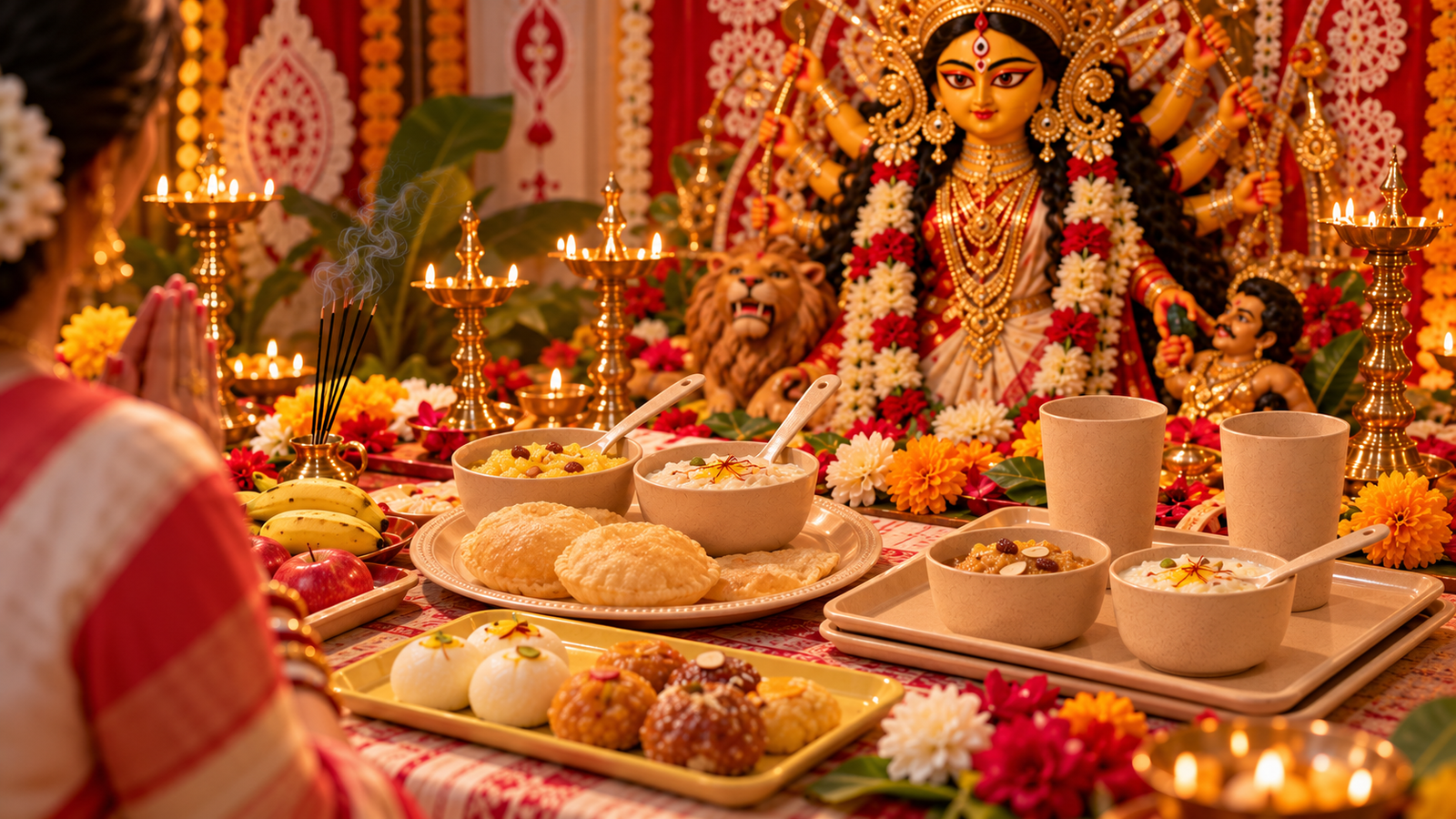
Maa Durga aa rahi hain. She returns every year to a home, a pandal, a family waiting for her. Lamps are lit, flowers are offered, bhog is prepared, and the whole atmosphere feels like a return to something older and more rooted.
But there is one small detail we often overlook: how that bhog reaches the hands of devotees. A plate may be used for a few minutes, while the waste it leaves behind can remain for far longer. This Durga Puja, perhaps the serving ritual can carry the same respect we already bring to the prayer itself.
Think of it as a simple cycle: from mitti to mitti. Maa’s aagman begins a celebration, the days of bhog and prasad bring families and communities together, and visarjan reminds us that everything eventually returns to the earth. Our choices during the festival can reflect that same sense of return.
Aagman se Visarjan Tak: Let the Celebration Complete Its Cycle
An eco-friendly Durga Puja is not about making the festival smaller. It is about making the choices around it more thoughtful. From natural-looking décor and responsible waste segregation to reusable or biodegradable serving options, every small decision can reduce unnecessary single-use waste.
That idea is already visible in contemporary Puja culture. In 2026, Kolkata coverage has highlighted pandal initiatives centred on plastic waste, recycling and longer-term environmental awareness. Across India, earlier green Puja initiatives have also used biodegradable or reusable materials for bhog and prasad distribution.
For bhog, the same principle is beautifully simple: choose serving ware that feels closer to the materials and values we associate with the earth, rather than defaulting to disposable plastic.
Ghar Ki Baat: Dadi/Nani Ki Thali, Aaj Ki Sustainable Choice
There is something special about the old family thali. Dadi or Nani would bring out the brass or steel plates, arrange the food carefully, and serve everyone before sitting down herself. The plate was not just a container; it was part of the ritual.
Today, convenience has made disposable plates common at gatherings. But convenience does not have to mean waste. A family-size bamboo-fibre or bio-composite thali set can bring back that feeling of a proper serving setup while fitting modern homes and festive gatherings.
The goal is not to recreate the past exactly. It is to take the best idea from it: use something designed to serve people well, and make the celebration responsible at the same time.
Pandal Aur Ghar Dono Ke Liye: Choose Serveware by Use Case
Whether you are arranging a small ghar ki puja or helping organise bhog at a community pandal, serveware needs to match the occasion.
- For ghar ki puja: a family-size dinner set can keep the bhog presentation organised and festive.
- For community bhog: bowls, plates and spoons can make distribution easier when many devotees are being served.
- For prasad and mithai: smaller bowls or cups can keep portions neat without relying on single-use plastic.
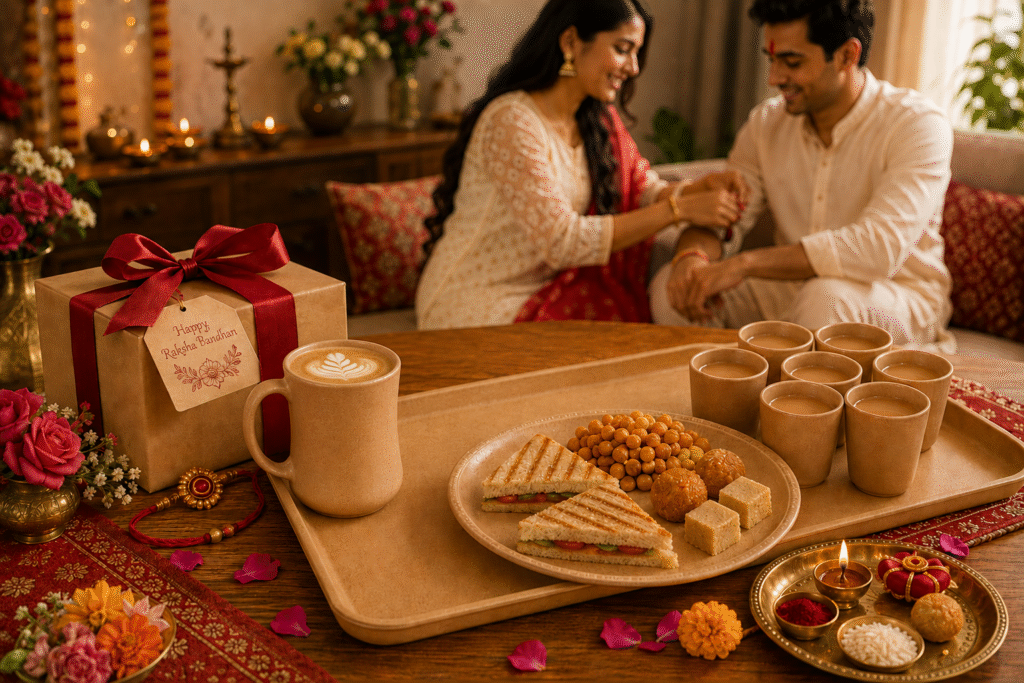
- For tea or festive drinks: reusable kullads or cups can complement the earthy visual language of the celebration.
- For the serving table: trays and coasters can keep the setup functional while maintaining a cohesive natural look.
For Pacing Grass, this is where material innovation meets an everyday ritual. The brand develops bio-composite products using bamboo fibre and agricultural residues such as rice husk, coffee husk and crop residue. The company describes its tableware as food-safe, BPA-free, lightweight and designed for everyday use.
Why Bamboo + Agricultural Residue Makes Sense for a Festive Table
The phrase “bamboo puja thali” often brings to mind a simple natural product. But the more useful question is what the material actually contains and how the finished product performs.
Pacing Grass works with a bio-composite approach that combines natural fibres and agricultural by-products. Bamboo fibre contributes structural strength, while materials such as rice husk and crop residue turn agricultural by-products into useful products rather than leaving them as waste.
That makes the story especially relevant to a festival built around return, renewal and community: the material itself carries a story of turning plant-based resources and agricultural residues into something useful for everyday life.
Important note for publishing: use “biodegradable” or “compostable” only where the exact product’s current technical documentation supports the claim and where disposal conditions are stated clearly. Do not imply that every bio-composite automatically disappears in ordinary soil or water.
A Small Change in the Bhog Ritual Can Become a Big Shared Message
Imagine a pandal where the bhog queue moves forward and the serving table is not surrounded by a pile of plastic plates. Imagine a home where the same festive thali can be used again after the Puja. Imagine children seeing sustainability not as a lecture, but as something built into the celebration.
That is the more meaningful version of a plastic-free Durga Puja: not perfection, but participation. One thali. One bowl. One serving tray. One family at a time.
The Innovation Behind the Ritual
Pacing Grass is incubated at the Startup Incubation and Innovation Centre (SIIC), IIT Kanpur, and its current company materials describe patented bio-composite technology based on bamboo and agricultural residues. The company’s technology and startup profile have also been highlighted by SIIC IIT Kanpur.
The credibility point should remain light in the final article: the festival story comes first; the technology simply explains why the material choice is possible.
This Durga Puja, Let the Thali Be Part of the Prayer
Maa Durga’s visit is about more than decoration. It is about family, food, faith, community and the feeling that something sacred has entered the home.
So when the bhog is served this year, choose a plate that reflects the spirit of the occasion. Choose materials thoughtfully. Reduce unnecessary single-use plastic. Reuse where possible. And where a compostable or biodegradable option is genuinely suitable, make that choice part of the celebration.
Iss Puja, apni Maa ko ek saaf, hara environment do.
Because the most beautiful offering is not only what we place before Maa—it is the kind of world we leave behind.
Explore Pacing Grass sustainable tableware and festive serving options at pacinggrass.com.
FAQ’s
| Question | Answer |
| How can I celebrate Durga Puja in an eco-friendly way? | Reduce single-use plastic, choose reusable or suitable biodegradable serving ware, segregate waste, and prefer lower-waste décor and serving practices. |
| What is an eco-friendly bhog serving option? | Depending on the use case, reusable metal or durable bio-composite serveware can reduce disposable waste. For single-use applications, choose a genuinely certified biodegradable/compostable option with appropriate disposal guidance. |
| Are bamboo thalis suitable for bhog? | A bamboo-fibre or bamboo-based bio-composite thali can be suitable when the specific product is food-safe and designed for the intended use. Check the manufacturer’s care and temperature guidance. |
| What is a plastic-free Durga Puja? | It is a celebration that actively reduces avoidable single-use plastic across serving, décor, packaging and waste handling while using reusable, recyclable or suitable biodegradable alternatives. |
| Why use agricultural waste in tableware? | Agricultural residues such as rice husk and crop residue can be converted into useful materials, helping create value from by-products that might otherwise be discarded or burned. |