


Sustainable Raksha Bandhan: Simple Ways to Celebrate With More Meaning and Less Waste
Some traditions are worth keeping. Some habits are worth changing.
Raksha Bandhan has always been a celebration of something beautifully simple—a rakhi tied around a sibling’s wrist, a little sweetness, a few blessings, a thoughtful gift and, most importantly, time spent together.
But as celebrations have become bigger, they have also become surrounded by more packaging, disposable decorations, single-use tableware and gifts that may not always have a place in everyday life.
This Raksha Bandhan, there is an opportunity to celebrate a little differently.
A sustainable Raksha Bandhan does not mean giving up the excitement, colour or warmth of the festival. It simply means becoming a little more conscious about the things we bring into the celebration and what happens to them afterwards.
You can still decorate your home beautifully, prepare your favourite festive dishes, exchange gifts and create plenty of memories. The difference is that the celebration can be thoughtful not only for the people around the table, but also for the world outside it.
The most meaningful celebrations are often not the ones with the most things. They are the ones where every little detail feels intentional.
What Does a Sustainable Raksha Bandhan Really Mean?
The word sustainability can sometimes make a simple family celebration sound complicated. In reality, it can begin with very ordinary choices.
Instead of buying decorations that will be used for a few hours and then thrown away, you can choose pieces that can be brought out again next year. Instead of relying entirely on disposable plates, bowls and cups for a family meal, reusable alternatives can become part of the celebration. And instead of choosing a gift simply because the packaging looks impressive, you can think about whether your sibling will genuinely use it.
That is really the heart of an eco-friendly Raksha Bandhan.
It is not about making every decision perfectly. It is about making better choices wherever they are practical.
A festival does not become less festive because it creates less waste. In many cases, a simpler celebration can actually feel warmer, more personal and more connected to the traditions that started it all.
Let the Rakhi Remain the Heart of the Celebration
Among all the decorations, gifts, and food, the Rakhi itself remains the most important part of the day.
Choosing a thoughtfully designed Rakhi with minimal and sensible packaging is a small place to begin. Traditional fabric-based Rakhis, handmade designs and options with less unnecessary plastic can fit naturally into a more conscious celebration.
There is no need to turn Rakhi shopping into a complicated sustainability exercise. Simply being aware of excessive packaging and choosing a design that feels meaningful can make a difference.
After all, the value of a Rakhi has never really come from the amount of material used to make it.
It comes from the relationship it represents.
Create a Festive Home Without Overdoing the Décor
A beautiful Raksha Bandhan celebration does not require every corner of the house to be covered in disposable decorations.
Sometimes, a few carefully chosen details create a much more elegant atmosphere.
Fresh flowers, diyas, warm lights, traditional fabrics, a simple table runner and reusable decorative pieces can completely transform a room. Natural textures and warm earthy colours can also create a beautiful festive setting without making the space feel overcrowded.
The advantage is that many of these elements can return for Diwali, birthdays, anniversaries, family dinners, or the next Raksha Bandhan.
This is where sustainable decoration becomes more than an environmental choice. It can also become a practical one.
Rather than buying something new for every occasion, you slowly build a collection of beautiful pieces that become part of your family’s celebrations.
Make the Rakhi Thali Part of the Family Tradition
The Rakhi thali is one of the most beautiful parts of the ceremony.
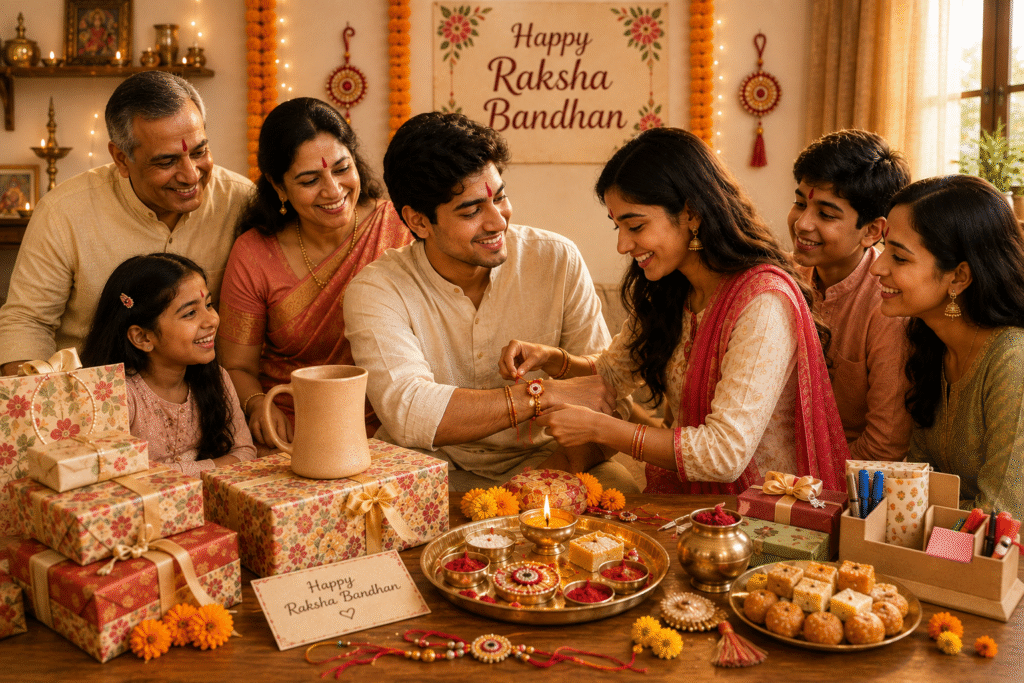
A traditional plate decorated with roli, rice, a diya, sweets and the Rakhi instantly creates a sense of occasion. Instead of purchasing a disposable Rakhi kit every year, consider creating a reusable thali that can become part of your family’s tradition.
Perhaps the same plate comes out every Raksha Bandhan.
Perhaps the diya has been used for years.
Perhaps a small decorative bowl has become associated with the ceremony.
Over time, these objects begin to carry memories.
That is one of the quieter sides of sustainable living — choosing things that stay with you long enough to become meaningful.
Bring Sustainability to the Dining Table
After the Rakhi ceremony, food naturally becomes one of the main parts of the celebration.
Sweets are served. Snacks are passed around. Lunch or dinner is prepared. Tea, coffee, sharbat or other drinks make their way around the room as everyone settles down to talk.
This is also where a celebration can generate a surprising amount of unnecessary waste.
Disposable plates, bowls, cups and spoons may be convenient, particularly when a large number of people are visiting, but reusable tableware can offer a more practical alternative whenever possible.
Eco-friendly dinnerware can also bring a natural, warm character to the festive table. Instead of looking like disposable partyware, well-designed reusable plates and bowls can become part of the dining experience itself.
Bio-composite tableware made using materials such as bamboo fibre and agricultural residues adds another dimension to this idea. It combines the familiar functionality of everyday tableware with an approach that looks beyond conventional materials.
The important thing is that sustainability should never mean sacrificing usability. The products on your table should still be comfortable, practical, durable and suitable for the way your family actually eats.
Let the Food Create the Festive Atmosphere
Indian celebrations have always understood something that modern event planning sometimes forgets: food can create an atmosphere all by itself.
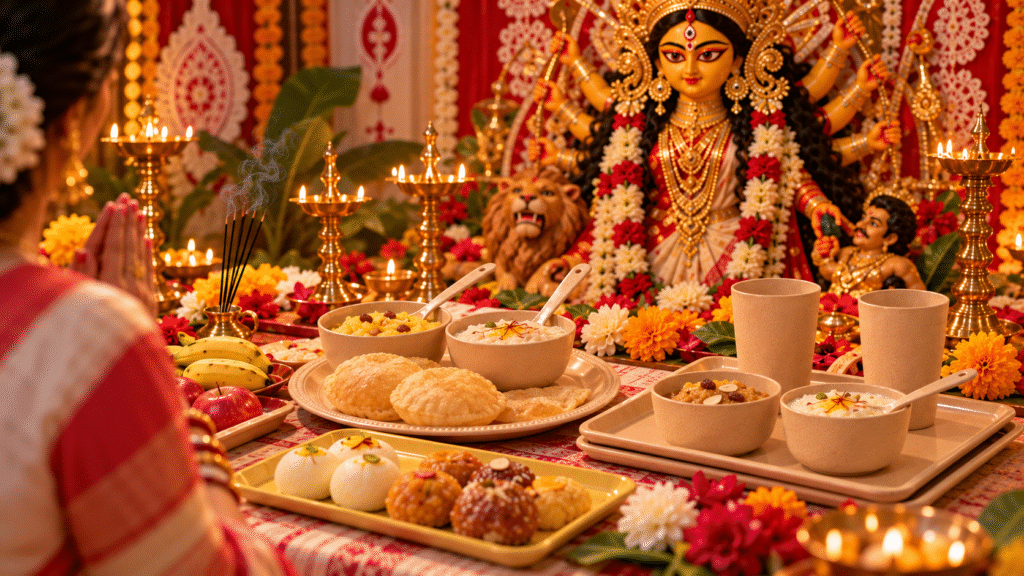
A table filled with homemade sweets, kheer, laddoos, namkeen, fresh fruit and family favourites does not need excessive decoration to feel festive.
There is something particularly comforting about sitting down to a meal prepared by someone in the family and eating together without rushing.
You can make the table feel special simply by paying attention to how everything is presented.
A warm-toned table setting, natural textures, attractive serving bowls and reusable dinnerware can make even an ordinary family meal look celebration-ready.
The focus stays where it belongs—on the food and the people sharing it.
Choose a Gift That Has a Life Beyond Raksha Bandhan
Gift shopping is another area where a little thought can make a big difference.
Rather than asking only, “What would look good as a Rakhi gift?“”,” ask something slightly different:
“What would my sibling actually use?”
Maybe they start every morning with coffee. Maybe they spend hours at a desk. Perhaps they recently moved into a hostel or PG. Maybe they love entertaining friends or simply enjoy having a favourite mug that becomes part of their daily routine.
These details can lead to much better sustainable gifting ideas than simply choosing a generic hamper.
A reusable coffee mug, for example, can become part of someone’s morning routine long after Raksha Bandhan is over.
The celebration may last a day.
The usefulness of the gift can continue much longer.
A Simple Gift Can Still Feel Beautifully Personal
Sustainable gifting does not mean the final gift has to look plain, rustic or overly focused on being “eco-friendly.”
Presentation still matters.
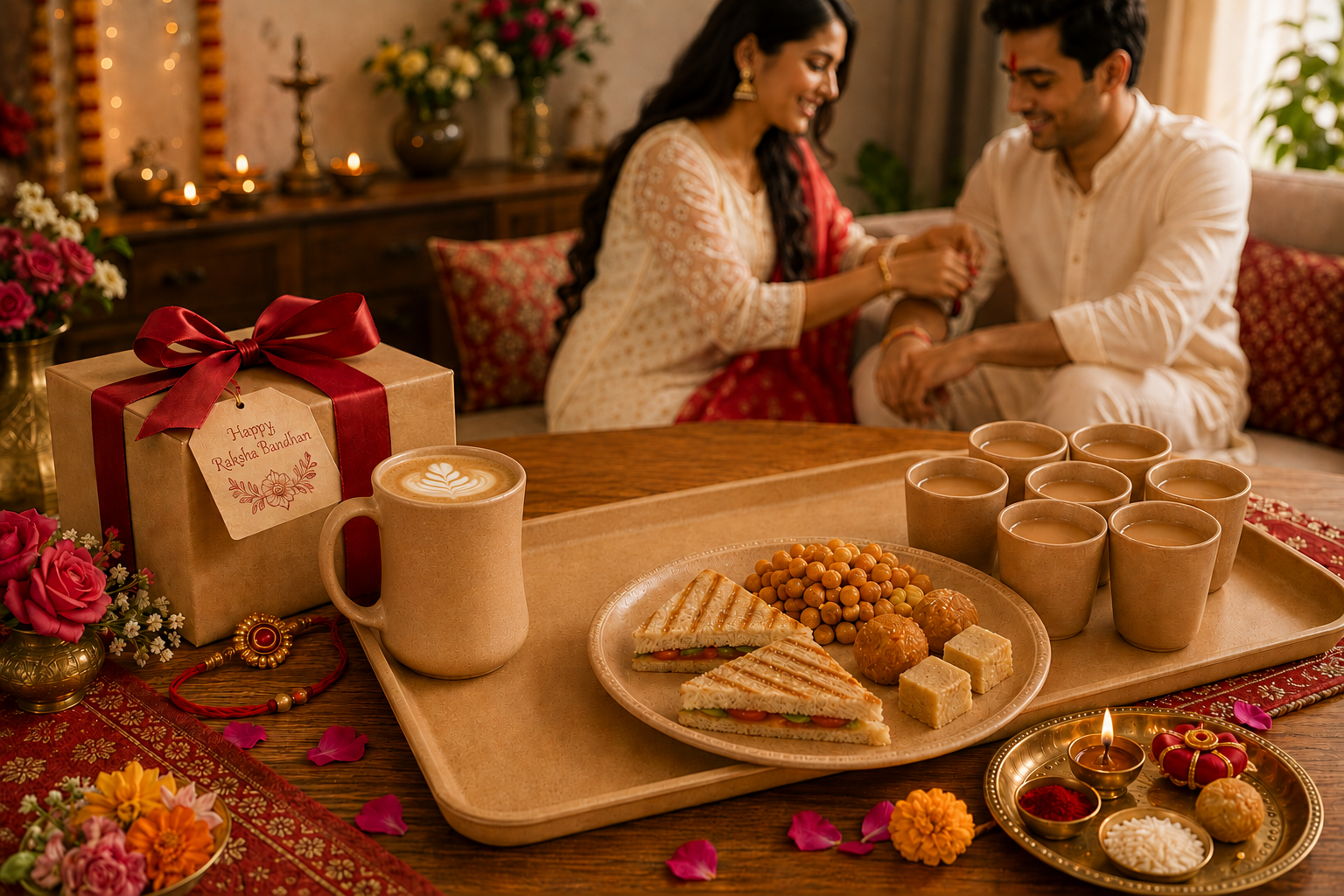
Imagine a warm sandy-brown bio-composite mug placed inside a neat gift box with a few coffee sachets, a small chocolate and a handwritten message. Wrap the box with a tasteful satin or fabric ribbon and keep the overall colour palette simple.
There is no need for excessive artificial leaves, rough jute rope or layers of unnecessary decoration.
A clean and coordinated presentation can actually make an affordable gift feel considerably more premium.
The sustainability should come naturally from the choices behind the gift rather than becoming the only thing the recipient sees.
Sometimes, the most beautiful gift is simply one that looks like someone took time to put it together.
Think About What Happens to the Gift Wrapping
Gift wrapping is often overlooked because it is used for such a short period.
A beautifully wrapped present can be opened in less than a minute, leaving behind layers of paper, plastic, ribbons and packaging.
This does not mean gifts should not be wrapped.
It simply gives us an opportunity to think about how they are presented.
Fabric wrapping, reusable gift bags, recyclable paper, reusable boxes and quality ribbons can all be better choices when used appropriately.
A beautiful ribbon can be saved and used again.
A fabric pouch can become useful storage.
A sturdy gift box can hold something else later.
When the packaging itself has a second life, the gift continues to give even after the wrapping has been removed.
Sustainability Does Not Have to Look Plain
There is often an assumption that an eco-friendly celebration has to look minimal to the point of being boring.
It doesn’t.
In fact, natural materials and earthy colours can create an incredibly sophisticated festive aesthetic.
Imagine a table styled with warm beige and sandy-brown tones, fresh flowers, soft golden lighting, traditional Indian elements and beautifully arranged food.
These colours work particularly well with bamboo and bio-composite products because they complement rather than compete with the natural appearance of the material.
Sustainable living does not mean removing beauty from everyday life.
It can mean finding beauty in materials, products, and traditions that can stay around for longer.
Make the Family Meal Part of the Memory
One of the easiest ways to make Raksha Bandhan more meaningful is to slow down after the ceremony.
Sit together.
Serve the food.
Talk.
Share old stories.
Laugh about childhood arguments.
Take photographs.
Let everyone stay at the table a little longer than usual.
These are the moments that tend to remain in people’s memories.
A sustainable Raksha Bandhan is ultimately not about how perfectly you followed an environmental checklist. It is about creating a celebration where the things you buy and use support the experience instead of becoming the experience.
The tableware supports the meal.
The gift supports the relationship.
The decoration supports the atmosphere.
And everything else takes a back seat to the people who have come together.
Give Your Sibling Something That Fits Their Life
The best sustainable gifts are not necessarily the ones with the most impressive environmental claims.
They are often the ones that become useful enough to remain in someone’s life.
A reusable mug on a work desk.
A serving bowl used during weekend meals.
A plate brought out during family gatherings.
A small accessory that becomes part of a daily routine.
This is where sustainable kitchenware and everyday products can become interesting gifting choices.
When a product is used repeatedly, it moves beyond being a festival purchase and becomes part of someone’s lifestyle.
That is a much more meaningful outcome than giving something that looks exciting on the day but is forgotten afterwards.
Small Changes Can Make the Celebration More Conscious
You don’t need to redesign your entire Raksha Bandhan celebration.
Maybe this year you simply replace disposable cups with reusable ones.
Maybe you reuse last year’s decorations.
Maybe you choose a gift with less packaging.
Maybe you prepare food at home instead of ordering individually packaged items.
Maybe you wrap the present with a reusable ribbon.
Individually, these changes may seem small.
Together, they begin to change the way we think about celebrations.
And that is often how sustainable habits actually develop — not through one dramatic decision, but through small choices that gradually become normal.
Make Sustainability Part of the Celebration, Not the Theme
The best eco-friendly celebrations don’t necessarily announce themselves as eco-friendly.
They simply feel thoughtful.
The table looks beautiful.
The food tastes familiar.
The gifts feel personal.
The decorations create warmth.
The family spends time together.
And there is less unnecessary waste left behind when everyone goes home.
That balance is important.
Sustainability should support the celebration rather than overshadowing it.
After all, Raksha Bandhan is fundamentally about relationships. The environmental choices we make should simply help us celebrate those relationships in a way that feels a little more responsible.
From One Raksha Bandhan to the Next
Perhaps the most meaningful part of making Raksha Bandhan more sustainable is that many of the choices don’t have to end when the festival does.
The reusable decorations can return next year.
The Rakhi thali can come out again.
The dinnerware can continue to be used for everyday meals.
The gift can become part of your sibling’s daily routine.
The fabric wrapping can be used for another present.
Even the habits developed while planning the celebration can carry into other festivals and family occasions.
What begins as a small change for Raksha Bandhan can gradually become part of a more conscious way of living.
And perhaps that is the real beauty of sustainable celebrations.
They don’t ask us to celebrate less.
They encourage us to celebrate with more thought.
A Festival Built Around What Really Matters
Raksha Bandhan doesn’t need more things to make it meaningful.
It needs more moments.
A rakhi tied with affection.
A sweet shared between siblings.
A meal around the family table.
A gift chosen because you know the person receiving it.
A handwritten note that makes them smile.
A photograph that brings back the memory years later.
Everything else is simply there to support those moments.
So this Raksha Bandhan, choose reusable where it makes sense. Reduce unnecessary packaging. Pick gifts that have a place in everyday life. Bring out decorations that can return next year. And make the dining table a place where everyone wants to stay a little longer.
Because the most sustainable celebration may not be the one with the fewest things.
It may simply be the one where every thing has a reason to be there.
Frequently Asked Questions
What is a sustainable Raksha Bandhan celebration?
A sustainable Raksha Bandhan celebration focuses on making thoughtful choices that reduce unnecessary waste while keeping the traditions and joy of the festival intact. This can include reusable decorations, reusable tableware, thoughtful gifts, minimal packaging, and better food planning.
How can I celebrate an eco-friendly Raksha Bandhan at home?
You can use reusable decorations, prepare a traditional Rakhi thali, serve food using reusable dinnerware, avoid excessive plastic packaging, and choose gifts that your sibling can use regularly. Even a few small changes can make a home celebration more conscious.
What are some sustainable Raksha Bandhan gift ideas?
Useful reusable products make good sustainable gifts because they can remain part of the recipient’s everyday routine. Reusable mugs, eco-friendly dinnerware, sustainable kitchenware, and other practical lifestyle products can all work well depending on your sibling’s interests.
How can I reduce waste during Raksha Bandhan?
Avoid unnecessary disposable decorations and single-use tableware where practical. Choose minimal or reusable gift packaging, plan food portions carefully and select products that can be used repeatedly instead of items intended for one-time use.
Can an eco-friendly Raksha Bandhan still look beautiful?
Definitely. Natural textures, warm lighting, fresh flowers, traditional fabrics, earthy colors, and thoughtfully arranged tableware can create an elegant festive setting. Sustainable does not have to mean plain.
Why is reusable tableware a good choice for festivals?
Reusable plates, bowls, coffee mugs, and spoons can be used across multiple festivals and everyday meals. They can also create a more polished dining setup compared with disposable alternatives, while reducing the need for single-use tableware.