



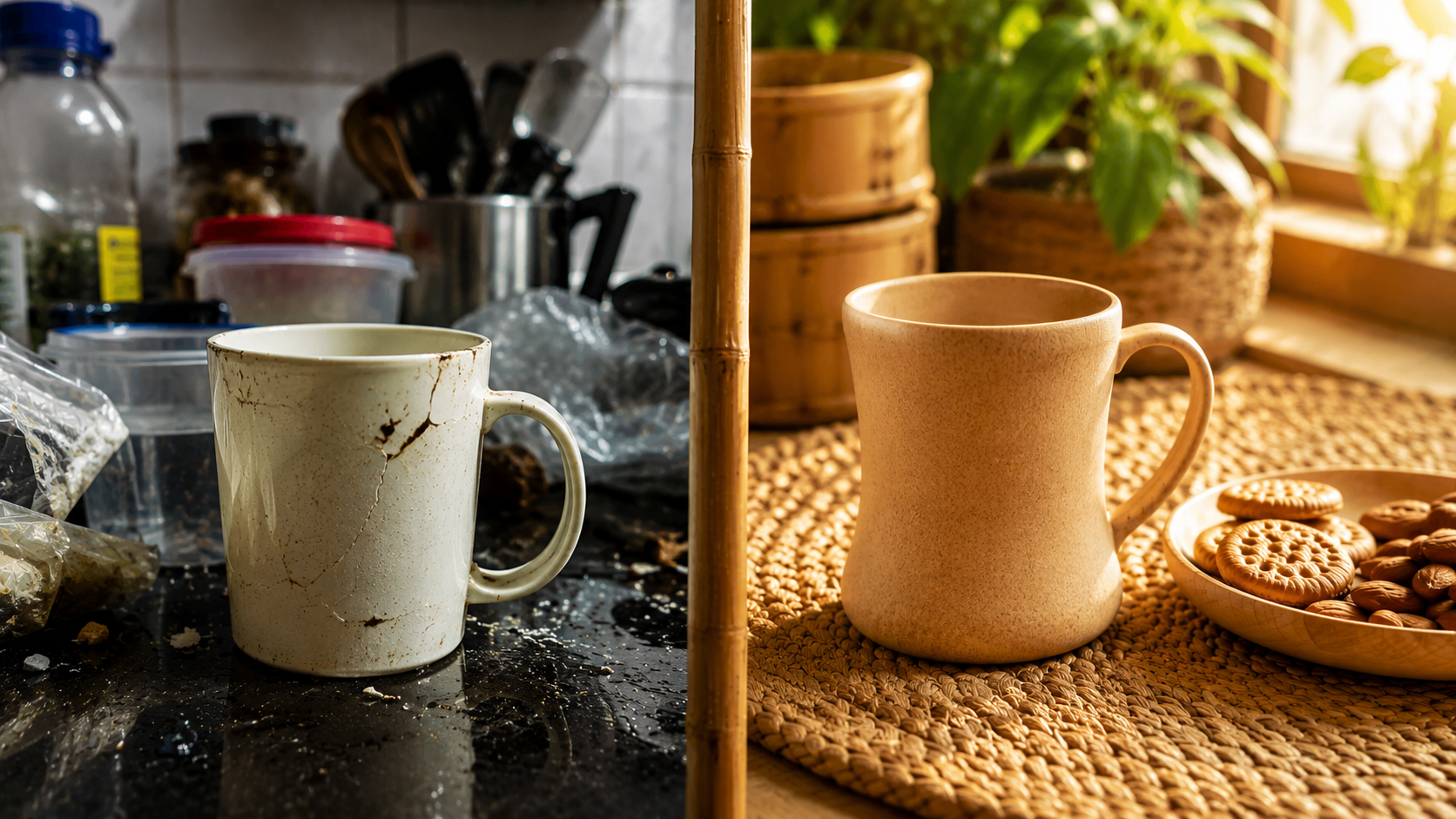
9 Out of 10 Indian Homes Still Believe—Is Yours One of Them?
You carry a tote bag to the sabzi mandi.
You say no to plastic straws at cafes.
You may be even sorting your dry waste on Tuesdays.
And every single morning—without thinking—you pour boiling chai into a plastic or melamine mug and call your day sustainable.
That gap between intention and habit? That is the myth.
This post breaks down the 5 most common sustainable breakfast myths that Indian homes repeat—including the ones that sound completely reasonable until you look closer.
At the end, there is a simple swap that takes thirty seconds and lasts years.
Let us get into it.
Myth 1 — My Mug Is BPA-Free, So It Is Safe
BPA-free is the wellness buzzword that did its job a little too well.
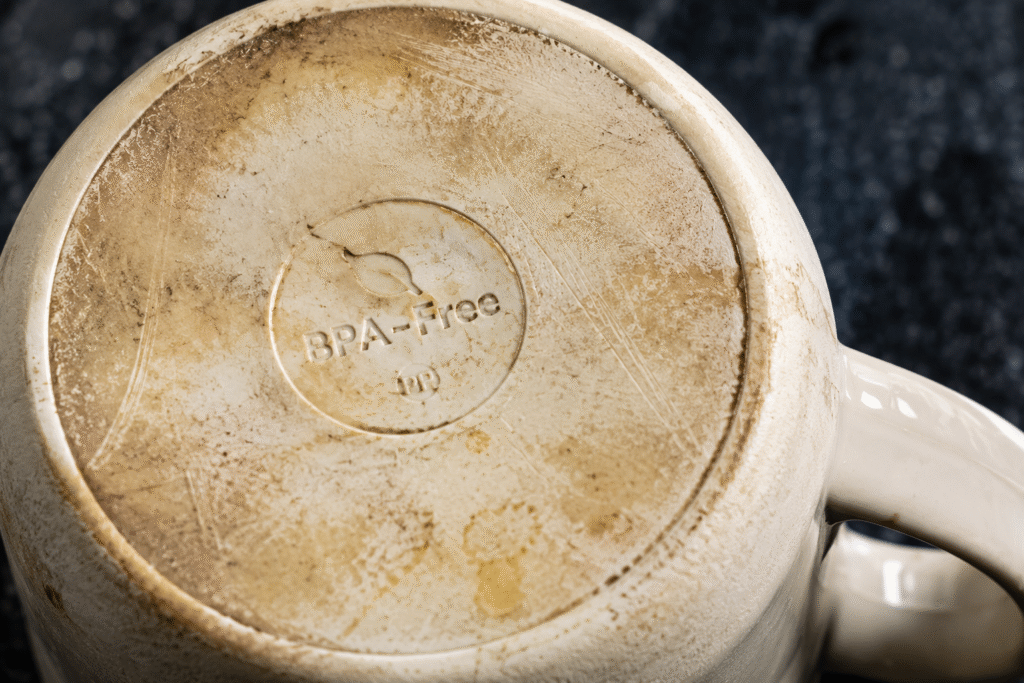
Everyone trusts it. Almost nobody checks what replaced BPA.
When BPA was phased out under consumer pressure, manufacturers switched to BPS and BPF — structurally similar compounds with similar hormonal disruption concerns. The label changed. The chemistry did not move very far.
Beyond that, even BPA-free plastic releases microparticles at high temperatures. Your morning chai sits at 85–90°C. That is the exact range where leaching increases in low-grade plastics.
| MYTH 1: BPA-free means completely safe. TRUTH: BPA-free means one chemical was removed. The thermal behavior of the plastic—and what it releases into your hot drink—depends on the entire material composition, not one label. |
A truly safe reusable coffee mug specifies what it is made of, not just what it does not contain.
Myth 2—Steel and Ceramic Are Always the Better Choice
Steel is genuinely great. We are not arguing with your dadi’s wisdom.
But here is what the sustainability conversation around steel does not mention enough:
- Steel production is energy-intensive — mining, smelting, and forming stainless steel generates significant carbon emissions per unit.
- Ceramic mugs chip, crack, and get discarded more often than people track. Each replacement has a manufacturing footprint.
- Neither material comes from agricultural waste. Neither closes a supply chain loop that would otherwise produce pollution.
This is not a reason to throw out your steel tumbler. It is a reason to think more carefully about what “sustainable material” actually means in context.
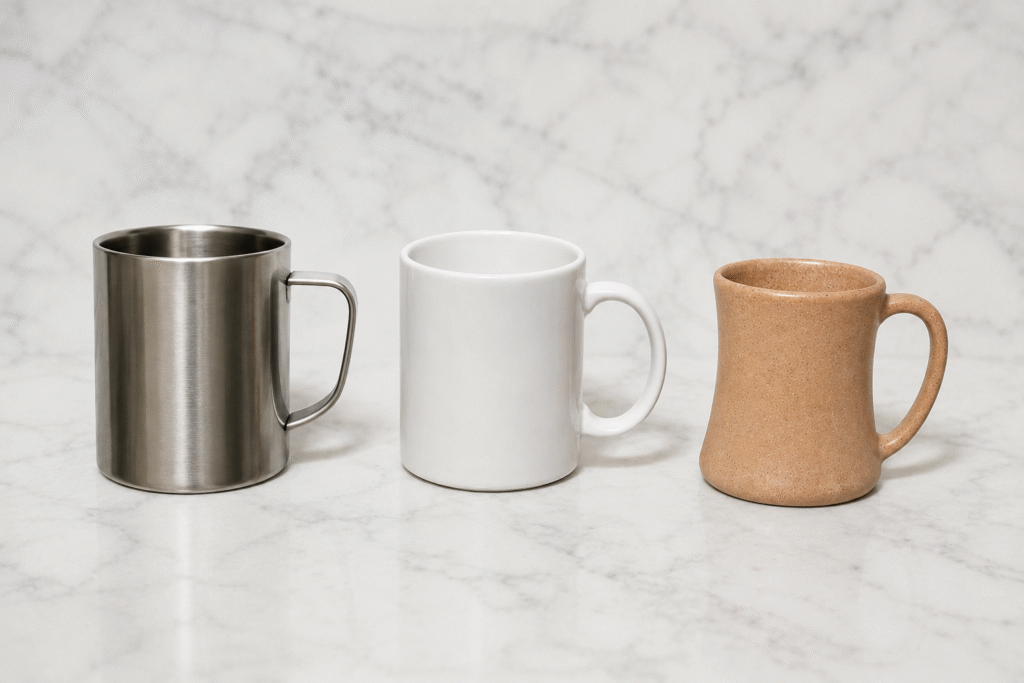
| MYTH 2: Steel and ceramic are always more sustainable than bamboo. TRUTH: Sustainability depends on the full lifecycle—extraction, manufacturing, use, and end of life. Bamboo products made from agricultural waste can have a significantly lower lifecycle impact than virgin steel or ceramic. |
Myth 3 — My Kitchen Choices Do Not Really Affect My Carbon Footprint
The carbon footprint conversation usually points at cars and flights.
Kitchen choices feel too small to count.
But consider this: the average Indian household replaces plastic and melamine kitchenware every two to three years. That replacement cycle — across 300 million homes — creates a continuous demand for petrochemical manufacturing, packaging, and landfill disposal.
The impact of one household’s kitchen switch is small. The aggregate of a cultural habit change is not.
Your carbon footprint is not one big number. It is a thousand small ones adding up quietly.
Daily use kitchen products are one of those quiet contributors. Not the loudest. But one of the most fixable.
| MYTH 3: Kitchen swaps are too small to make a real difference. TRUTH: Frequency matters as much as scale. A choice you make every single morning for ten years compounds into something measurable — in your body and in waste generation. |
Myth 4-Eco Friendly Kitchen Products Are Fragile and High Maintenance
This is the myth that keeps most people from making the switch.
The assumption: eco-friendly means delicate. Bamboo products sound like they will splinter, absorb stains, or fall apart in the dishwasher.
Bio-composite bamboo crockery—the kind made from compressed bamboo fibre with food-grade binding—is structurally stronger than most people expect.
- Dishwasher safe at standard wash cycle temperatures (65–70°C).
- Microwave safe — tested, not assumed.
- Does not absorb odors or stain under normal use.
- No special storage or care required. Use it like any other daily piece of crockery.
The maintenance myth comes from confusing raw bamboo (which does absorb moisture) with engineered bamboo composites (which do not behave the same way at all).

| MYTH 4: Bamboo kitchenware needs special care and breaks easily. TRUTH: Bio-composite bamboo crockery is built for daily use—it’s dishwasher-safe, microwave-safe, and structurally durable. It is not decorative. It is functional. |
Myth 5 — Sustainable Products Are Always Imported and Expensive
Fair concern. The sustainable products aisle in Indian cities has historically been full of imported items with import markup prices and shipping carbon costs that quietly undercut the eco-friendly claim.
But that is changing — and changing fast.
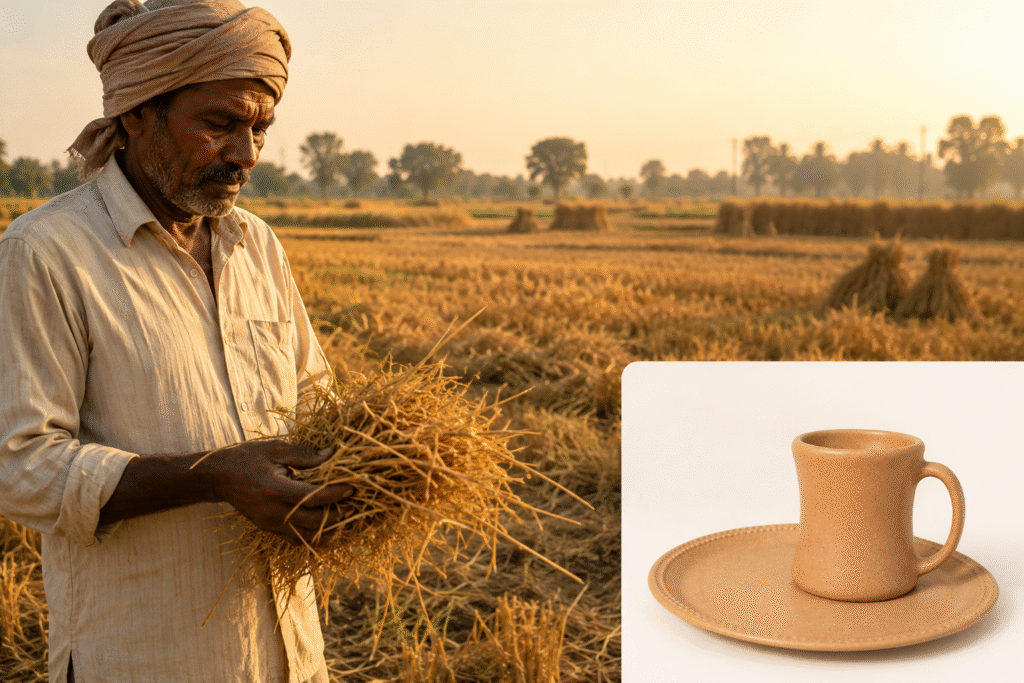
India has one of the world’s largest bamboo reserves. It has millions of tonnes of agricultural waste—rice husk, parali, coffee husk—that currently either gets burned or buried. The raw material for genuinely sustainable kitchenware exists here, in abundance, waiting to be used.
What was missing was the manufacturing process to turn it into something you would actually want on your breakfast table.
Made in India, from Indian farm waste”—that is not a marketing line. That is a supply chain that actually reduces waste rather than creating new demand for it.
So, What Does the Switch Actually Look Like?
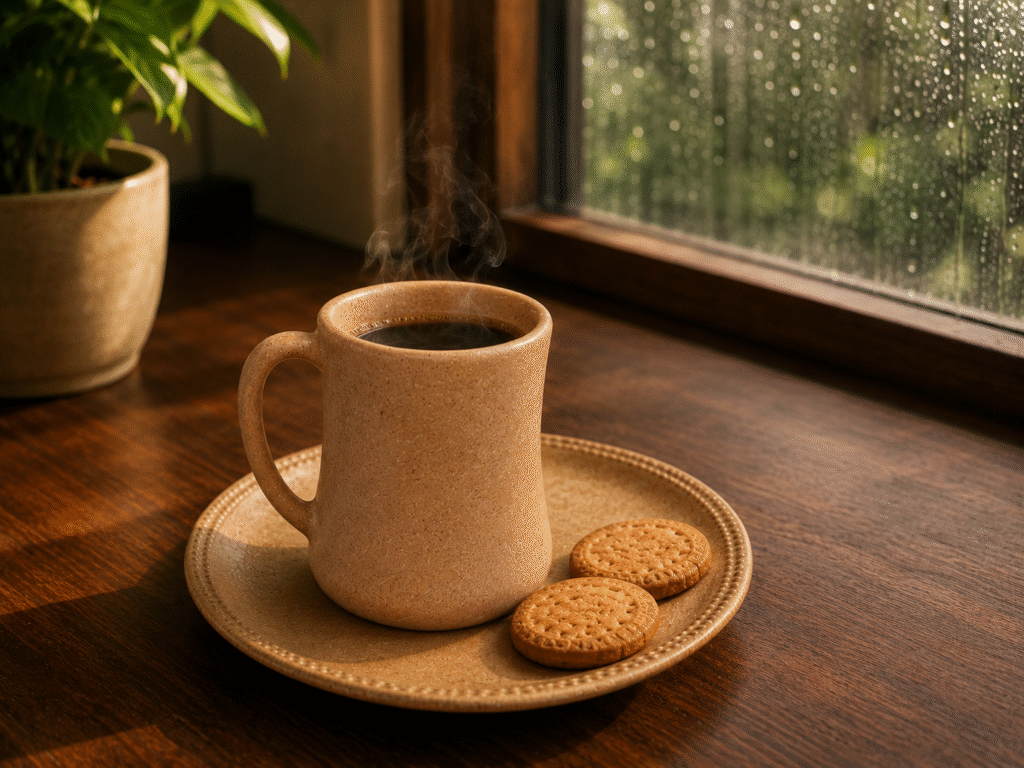
It looks like a bamboo coffee mug with a snack plate sitting on your kitchen counter tomorrow morning.
That is it. No lifestyle overhaul. No expensive haul. One swap.
The Pacing Grass Bamboo Breakfast Set is built from our patented bio-composite formulation—bamboo fibre, rice husk, coffee husk, and parali—compressed and bound without BPA, melamine, or formaldehyde.
It is BPA-free by material design. Microwave safe. Dishwasher safe. Made in Ghaziabad, Uttar Pradesh, by a team incubated at IIT Kanpur’s SIIC program.
It is the kind of eco-friendly kitchenware that does not ask you to change your morning. Just what you hold during it.
Back to the Question—Is Your Home One of the 9?
Probably yes. Not because you are not trying, but because nobody told you these myths were myths.
The BPA-free label seemed enough. Steel felt inherently better. Bamboo felt fragile. Sustainable felt was imported.
All reasonable assumptions. All worth revisiting.
A sustainable breakfast is not about perfection. It is about one conscious choice that repeats—every morning, every cup, every year.
The 1 in 10? They just started somewhere real.
Start with what is in your hand.
About Pacing Grass
Pacing Grass Private Limited is an IIT Kanpur SIIC-incubated startup manufacturing eco-friendly bio-composite tableware and kitchenware from bamboo fiber, rice husk, coffee husk, and parali. Winner of Bharat Pitchathon 2023. Featured on DD Kisan. Based in Ghaziabad, Uttar Pradesh.
Website:
Great content! Keep up the good work!