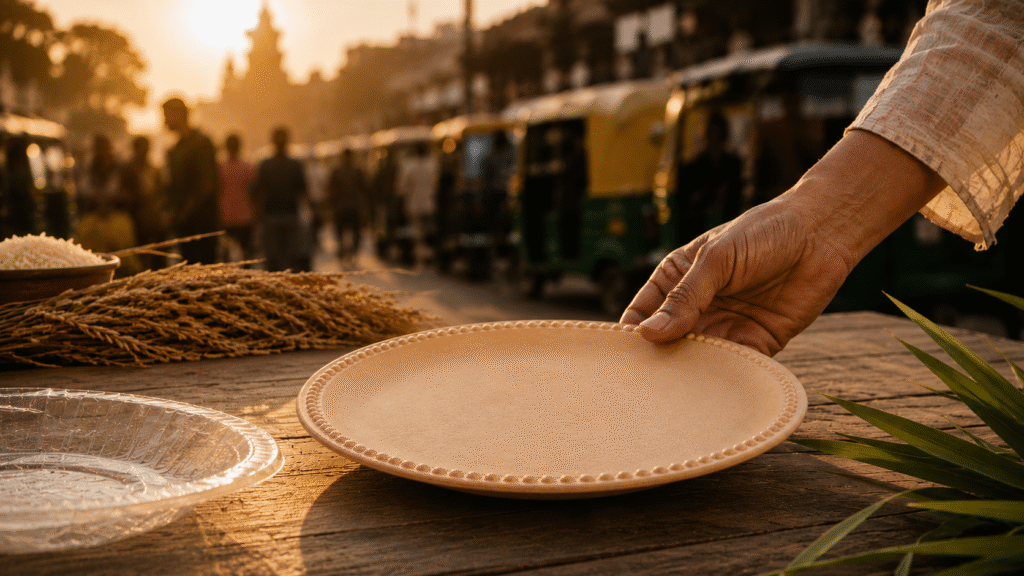



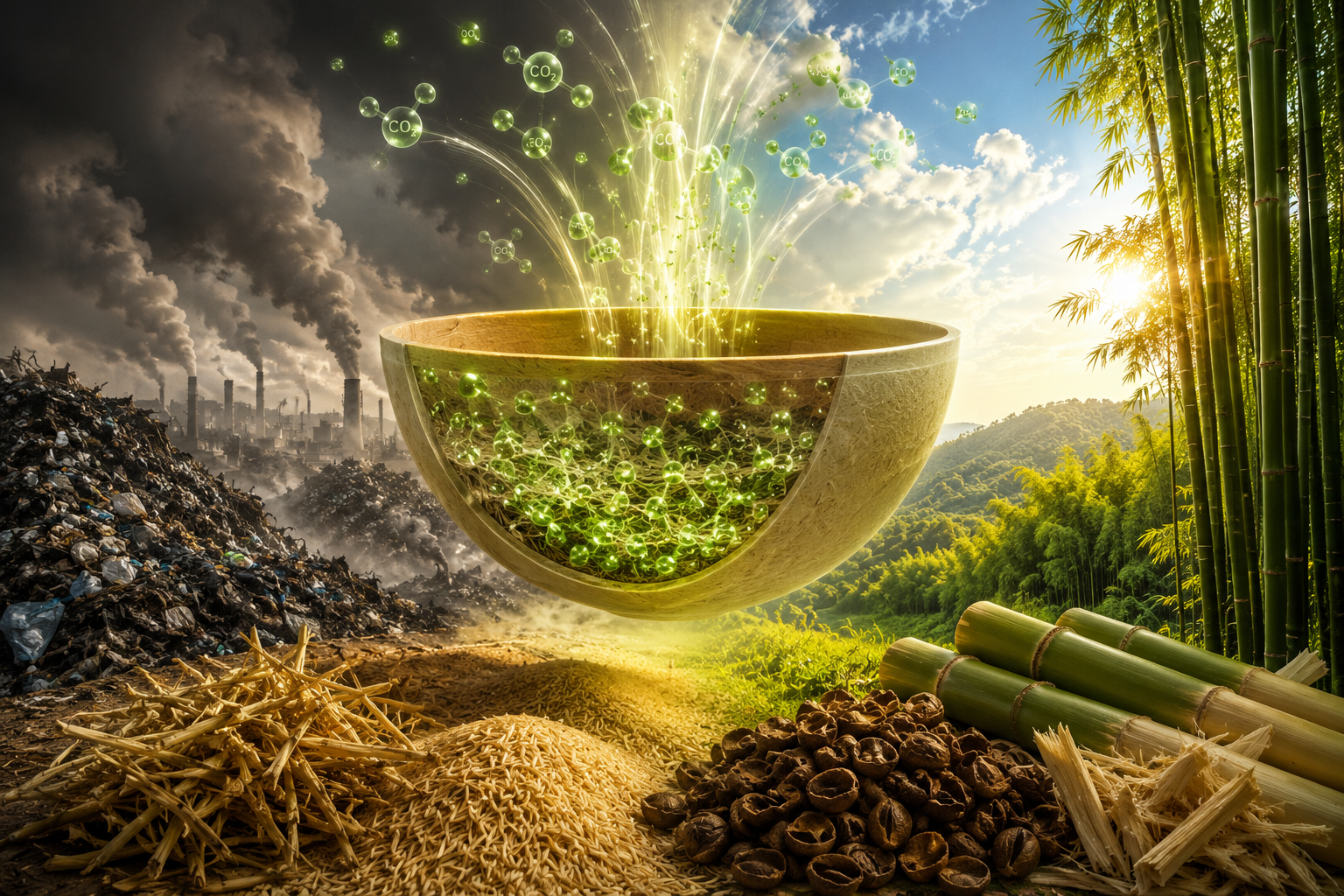
| Every time you use one of our bamboo bowls, a small but real amount of CO₂ stays locked inside the material — not in the atmosphere. That is not a marketing claim. It is a measurable, peer-reviewed fact about how carbon moves through bio-composite products. This article explains the science in plain terms, using our own products as the proof of concept. |
The Problem Nobody Talks About Enough
Everyone knows plastic is bad. But the conversation usually stops at ‘plastic ends up in the ocean.’ There is a second, quieter crisis that gets almost no attention: plastic is also a carbon emitter — before it reaches your kitchen, while it sits in a landfill, and for centuries after.
| 6 kg CO₂ emitted to produce 1 kg of plastic | 400 yrs Average plastic persistence in environment | 10% Of global CO₂ from deforestation (that bamboo fights) | 3.9x Climate benefits of bamboo products vs their emissions |
We built Pacing Grass to answer both problems simultaneously. Every product we make from bamboo, rice husk, coffee husk, and parali does something no plastic product ever can: it physically stores carbon inside itself while you use it.
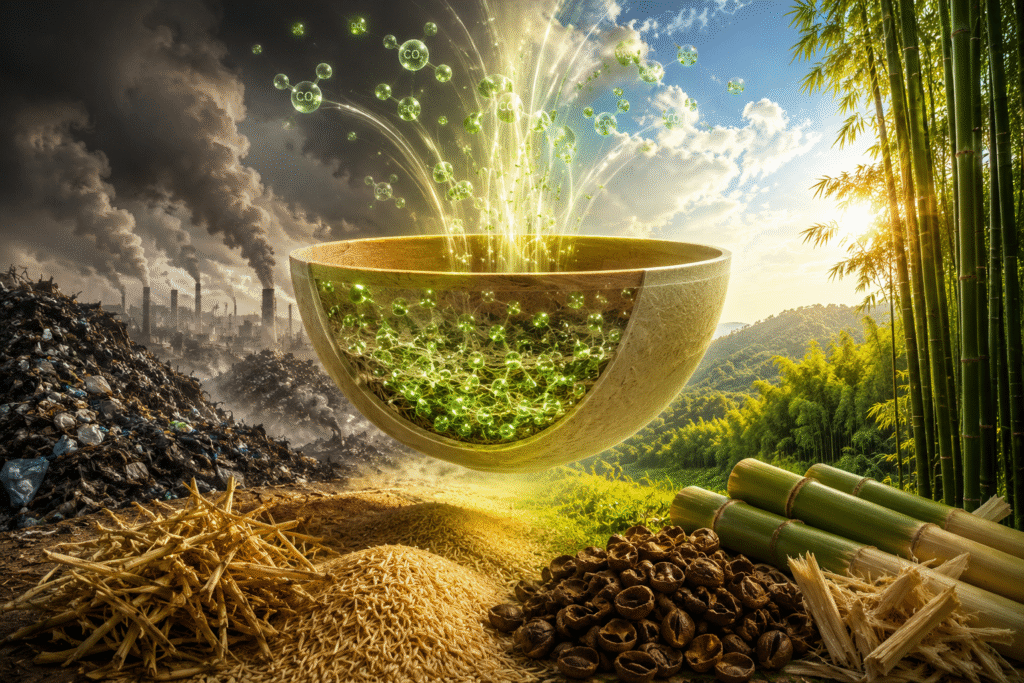
What Is Carbon Locking—and Why Is It Different from Carbon Offsetting?
Most people have heard of carbon offsetting—planting trees to compensate for emissions elsewhere. Carbon locking is not the same thing.
| Carbon Locking (also called biogenic carbon storage): When a plant grows, it pulls CO₂ out of the air through photosynthesis and converts it into cellulose, lignin, and other structural compounds. That carbon becomes the physical material of the plant. If that plant dies and rots, the carbon goes back into the atmosphere. But if the plant is harvested and turned into a durable product—a bowl, a plate, a mug—the carbon stays locked inside the product for as long as the product exists. The product itself becomes a carbon bank. |
Carbon offsetting is a promise made elsewhere. Carbon locking is a physical fact sitting on your dinner table.
Why Bamboo Is the World’s Most Efficient Carbon Trap
Bamboo is not a tree. It is grass—and that makes all the difference.
Speed
A tree that takes 30 years to mature sequesters carbon slowly. Bamboo reaches full maturity in 4–5 years. That means the carbon cycle—grow, harvest, lock—repeats nearly 6 times in the same period.
Volume
A single bamboo culm (stalk) sequesters 50–60 kg of CO₂ over its lifespan. A managed bamboo plantation in Asia has been measured as sequestering 17,800 kg of CO₂ per hectare every year—outperforming most tropical rainforests.
Regeneration
When you harvest a bamboo stalk, the root system (rhizome) is untouched. It immediately sends up new shoots. Harvesting bamboo actually triggers more carbon capture — not less.
The product phase
Here is where it gets interesting for us. When bamboo is processed into our bio-composite material, research shows that approximately 90% of the carbon in the original culm transfers into the finished product. That carbon stays locked for the entire product lifespan—often 5–10 years of daily use.
The India Angle: What Parali Has to Do With Carbon Locking
Every October and November, Delhi’s air turns toxic. The reason: farmers in Punjab and Haryana burn parali—the rice straw stubble left after the harvest. Burning parali releases all the carbon it stored back into the atmosphere at once, plus toxic particulate matter.
| Burning 1 tonne of parali releases approximately 3 kg of particulate matter and releases all stored carbon as CO₂ within hours. At Pacing Grass, we use parali as a raw material instead. The carbon that would have become Delhi smog stays locked inside your bowl, plate, or serving tray. |
Our parali-composite products do two things at once: they give farmers a revenue stream from their crop waste, and they prevent a carbon release event. Every Pacing Grass product made with parali is a direct intervention in the stubble-burning crisis—one bowl at a time.
Four Raw Materials, Four Carbon Stories
We manufacture from four agricultural materials, each with its own carbon-locking journey:
| 🌿 Bamboo | Grows to maturity in 4–5 years. Sequesters CO₂ at 1.5x the rate of comparable tree forests. Carbon locked from stalk to product with ~90% transfer efficiency. |
| 🌾 Parali (rice straw) | Saves it from being burned in fields. Directly prevents a carbon release event. Gives Punjab farmers an income from what was once a pollution problem. |
| ☕ Coffee husk | A by-product of coffee processing, typically dumped or burned. We intercept it before the carbon is released and lock it into composite material. |
| 🌾 Rice husk | Produced in enormous quantities at rice mills. Rich in silica — which actually improves composite strength. Carbon locked, material waste eliminated. |
Plastic vs Bio-Composite: The Carbon Side-by-Side
Here is what the lifecycle actually looks like, without the greenwashing:
| What we’re comparing | Plastic tableware | Pacing Grass bio-composite |
|---|---|---|
| Carbon during production | Emits 6 kg CO₂ per kg produced | Absorbs CO₂ while growing |
| Carbon while you own it | Emits CO₂ every year it sits in a landfill. | Locks carbon inside the product—sealed |
| End of life | Persists for 400+ years, leaching chemicals | Breaks down naturally; carbon returns to soil |
| Material source | Fossil fuels (non-renewable) | Bamboo + crop waste (renewable, fast-growing) |
| India’s relevance | Exacerbates the stubble-burning crisis | Converts parali & rice husk into value |
Our Products: Each One a Carbon Bank/Carbon Locking
“These are not abstract claims. Every product below is carrying locked carbon right now—in homes, hotels, and offices across India.”
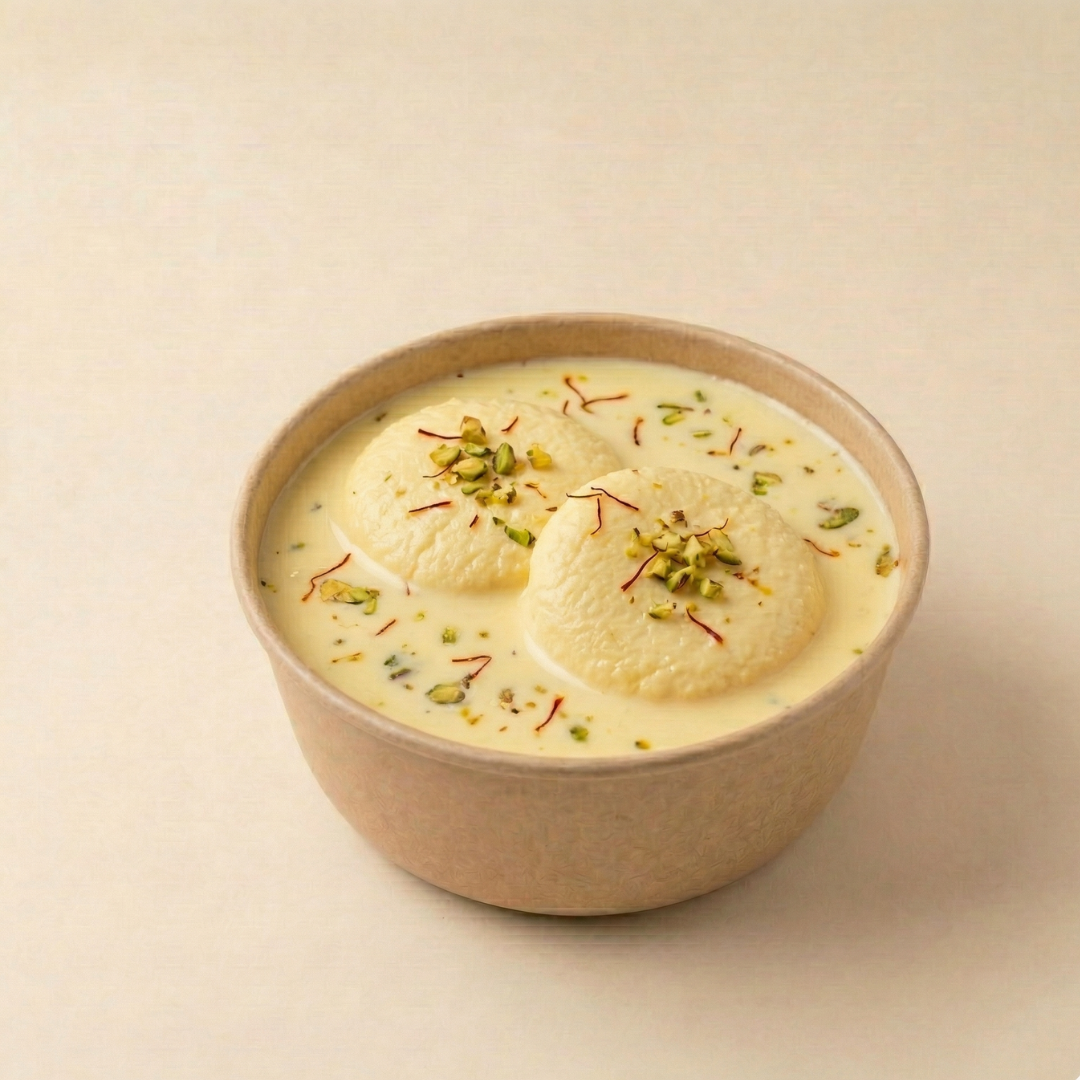 | Bamboo Rice Bowl — 300ml Dishwasher safe · BPA-free · Carbon-locked bio-composite | Shop now: https://pacinggrass.com/products/bowl-300ml |
 | Coffee Mug — 300 ml Made with coffee husk composite · Microwave safe · Carbon-negative | Shop now: https://pacinggrass.com/products/plates |
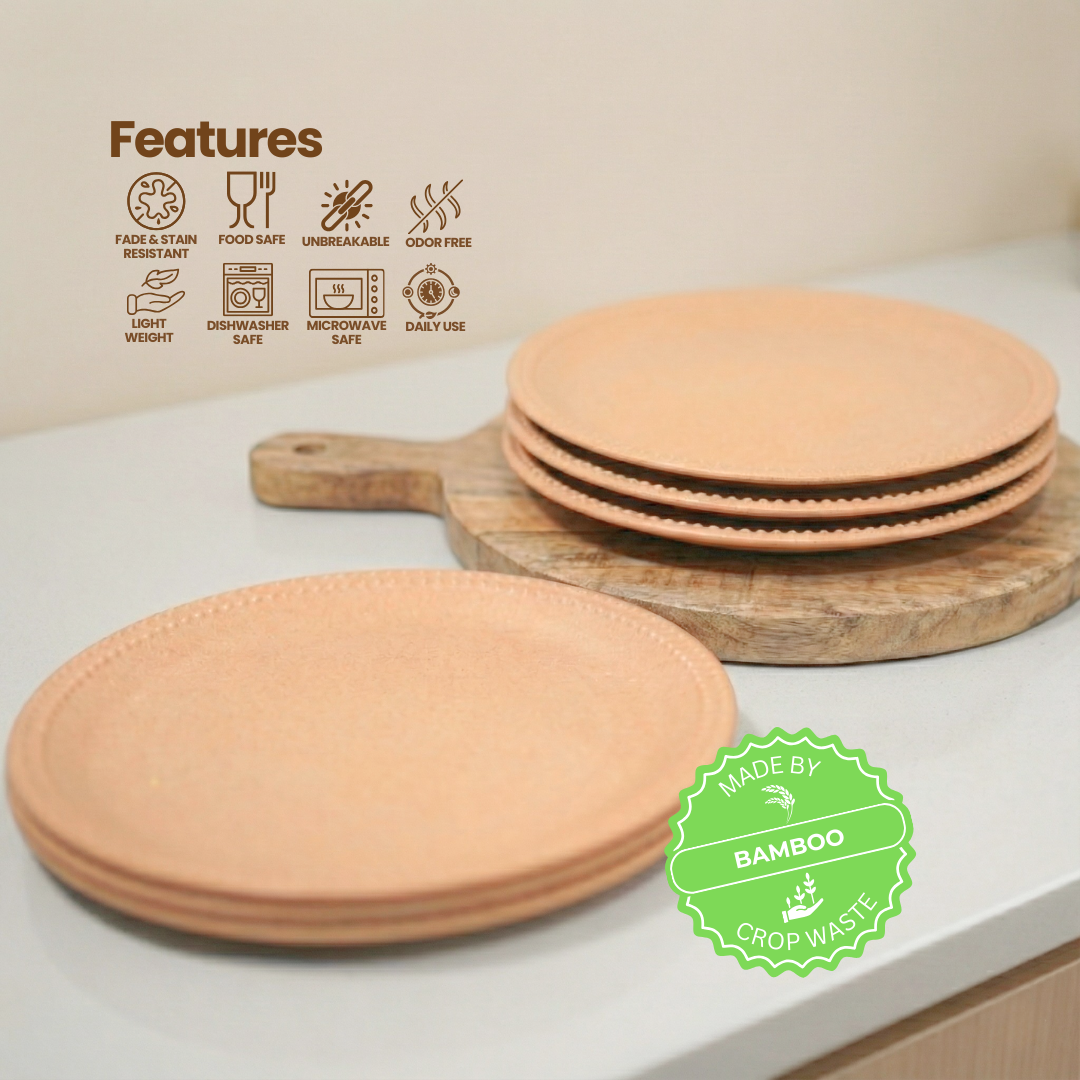 | Dinner Plates — 8″ & 10.5″ Lightweight · UV safe · Daily-use strength · Locks carbon for years | Shop now: https://pacinggrass.com/products/plates |
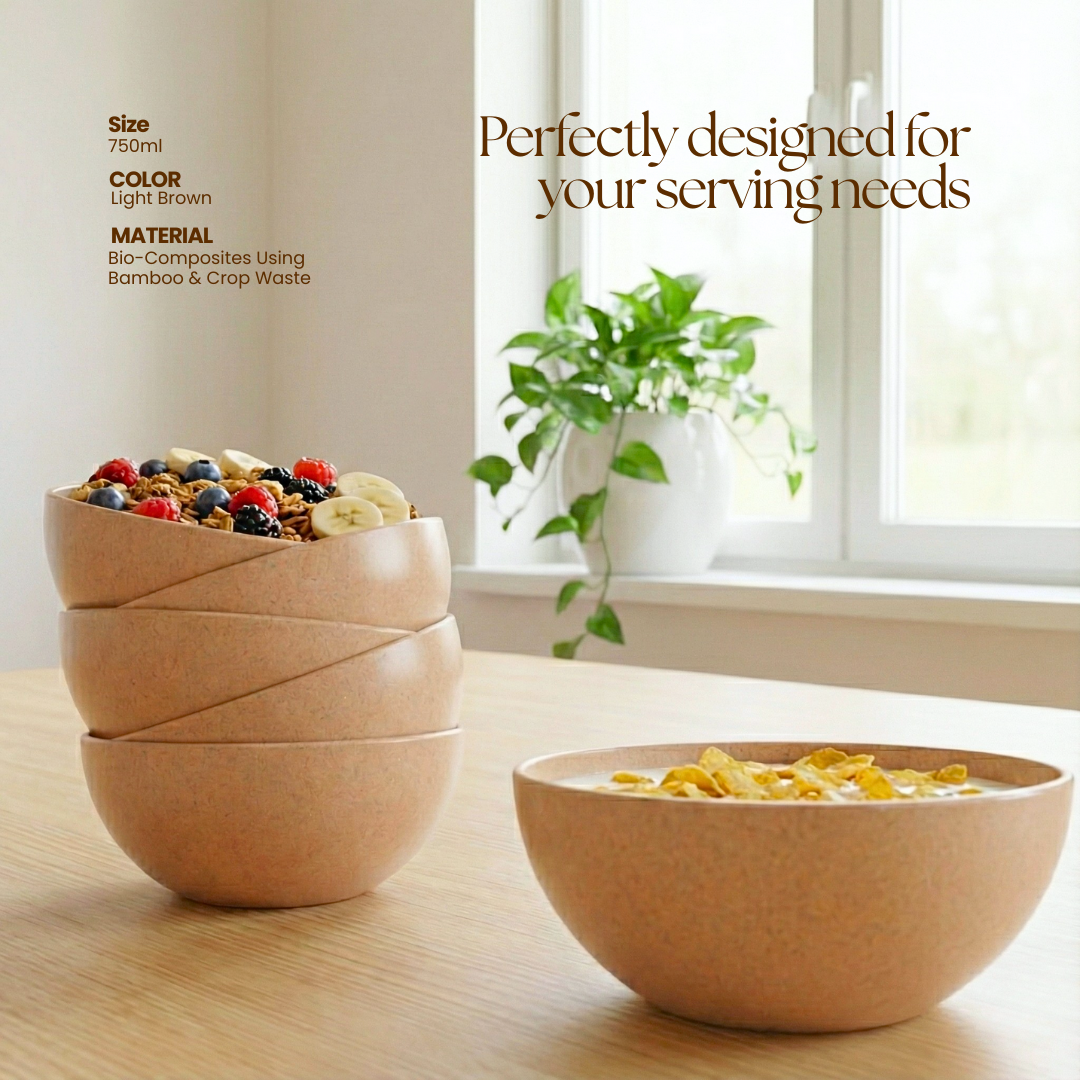 | Large Bowl — 750ml Perfect for dal, salads, desserts · Parali composite option available | Shop now → |
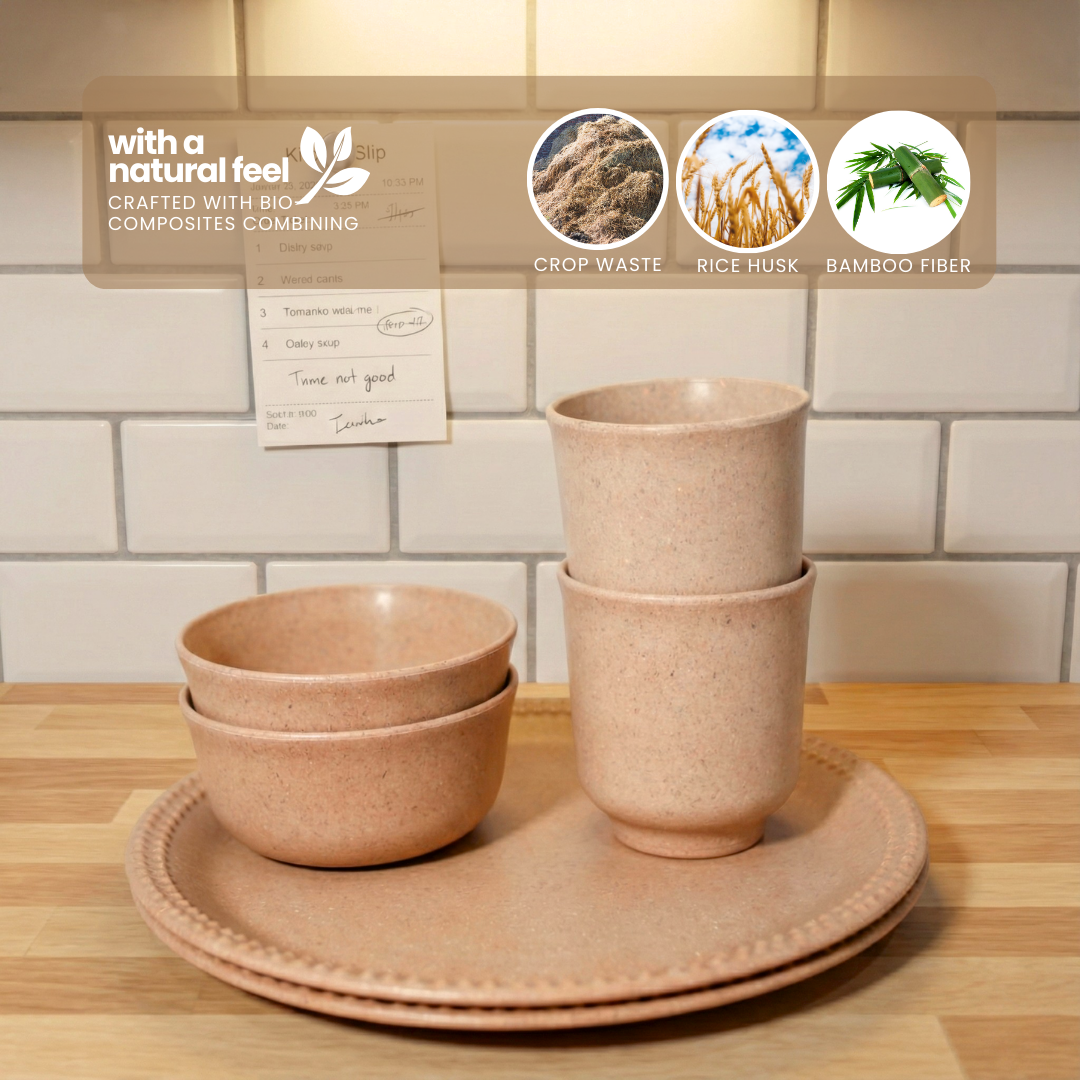 | Filter Coffee Set South Indian coffee culture meets carbon-locking science | Shop now → |
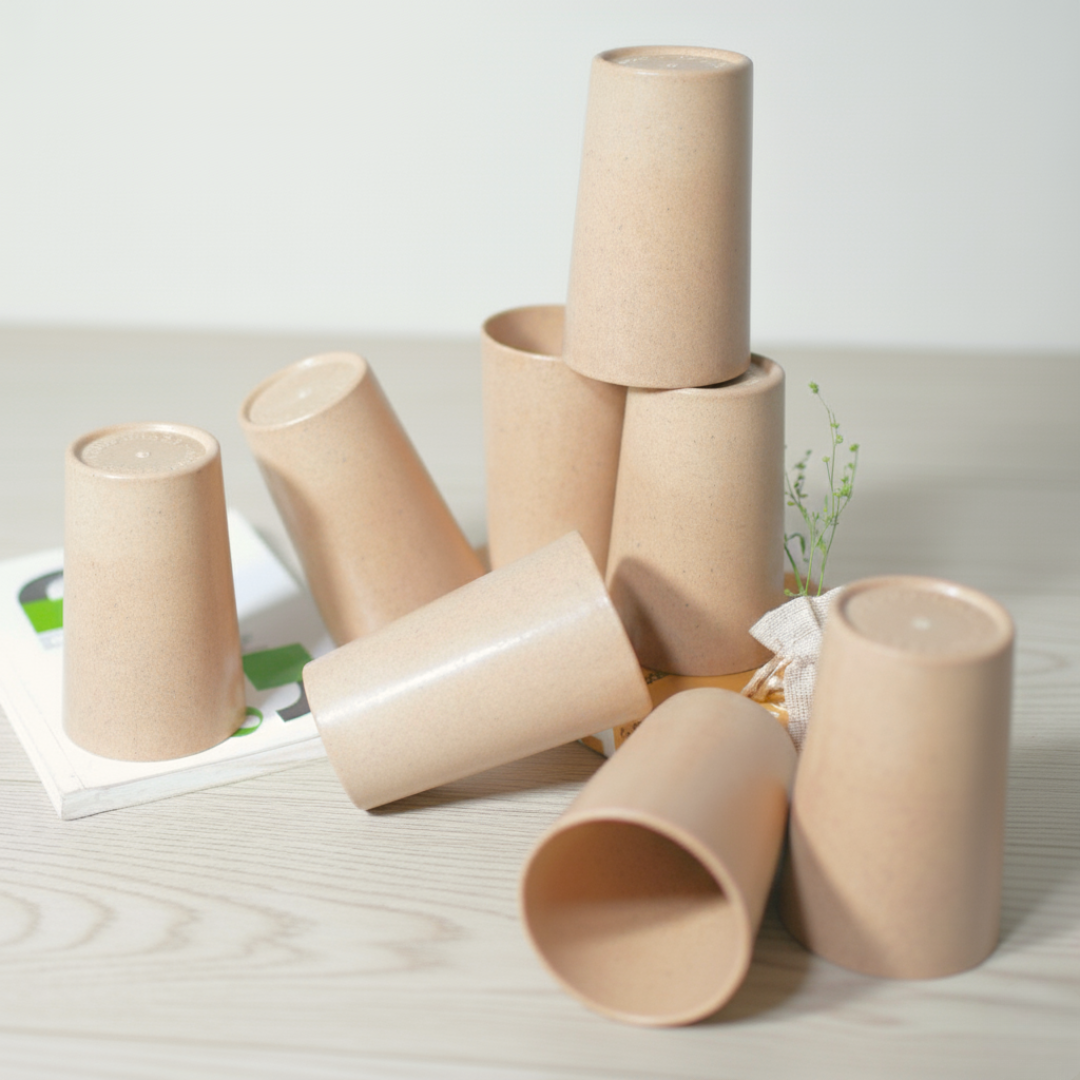 | Glass — 300ml The world’s most ironic name: a ‘glass’ that stores carbon | Shop now → |
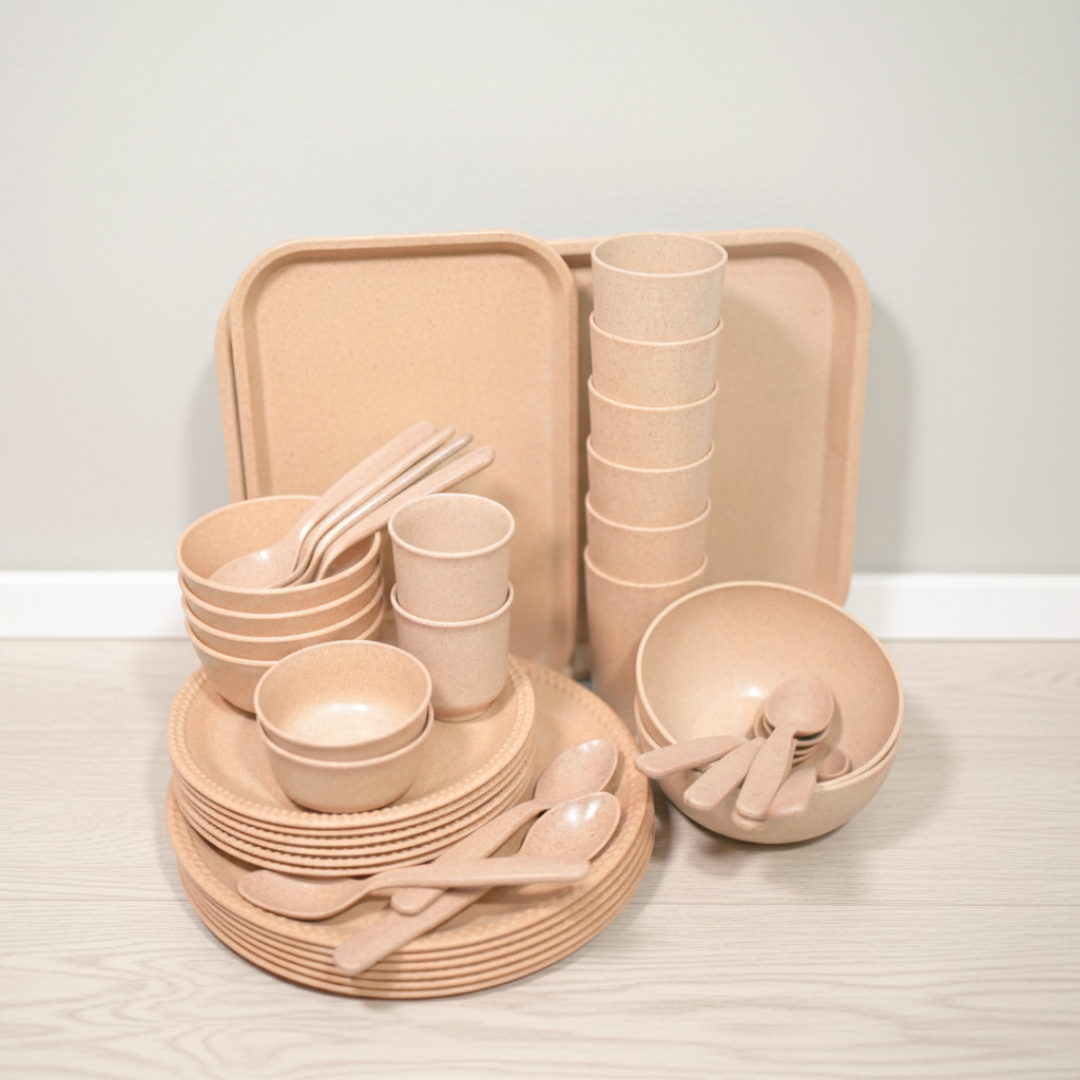 | Custom & Bulk Orders: Hotels, corporates, events—we lock carbon at scale | Shop now → |
The Maths on One Dinner Set
Let us make this concrete. A typical Pacing Grass dinner set—two plates, two bowls, and two mugs—weighs approximately 800–1000 grams of bio-composite material.
| ~50% Of bio-composite mass is stored carbon (by dry weight) | ~500g Approximate carbon locked in one Pacing Grass dinner set | 3–7 yrs Typical product lifespan—carbon locked for that entire period | 0 External plastic parts in any Pacing Grass product |
For reference: a single plastic dinner plate of similar size emits roughly 500–700 g of CO₂ during its manufacturing alone—before you ever use it. The pacing grass alternative does the opposite: it holds that carbon inside by carbon locking its structure.
Every Pacing Grass product is a small climate decision.
Not a symbolic one. A physical one
| Explore our full range at pacinggrass.com—or browse our Customization | Bulk Orders | Catalogue |
Read next:
What is bio-composite material?
Why India’s plastic ban is Pacing Grass’s moment
Sustainable HoReCa tableware guide
© Pacing Grass Private Limited · Khasra No. 427, Kadrabad, Modinagar, Ghaziabad (U.P)
info@pacinggrass.com · +91 8810645505